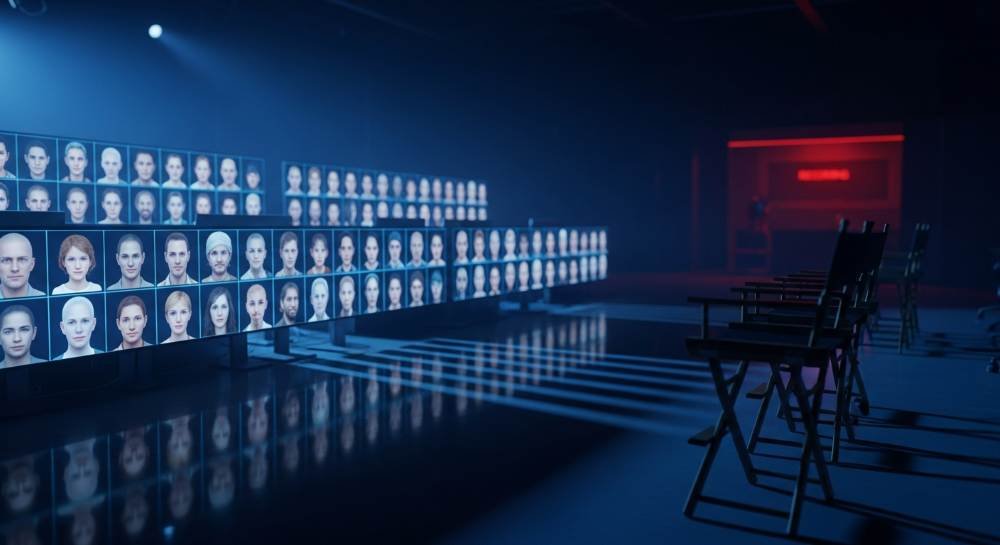
AI Is Quietly Reshaping the Economics of the Adult Industry
Artificial intelligence is no longer just a technological experiment inside the adult entertainment industry.
It is rapidly becoming an economic force that is redefining jobs, revenue models, and the future of digital labor.
As AI generated adult content scales up, real performers, production studios, and platforms are facing a profound financial shift.
A Shift From Human Labor to Digital Creation
As per The Economist, the adult industry has always adapted quickly to new technology, but AI represents a structural change rather than a format change.
Unlike video or streaming, AI eliminates the need for performers, sets, cameras, and production crews.
As per Wikipedia, modern generative AI systems can create realistic adult images and videos entirely through algorithms.
Once trained, these systems can produce unlimited content at near zero marginal cost.
For studios, this marks a major reduction in operating expenses. For performers, it signals a growing threat to income stability.
Decline of Real Performers and Job Losses
As per Marigold Tech News, adult performers are increasingly competing with AI generated models that do not age, demand pay, or require contracts.
Studios experimenting with synthetic characters report lower costs and faster content production.
As per industry analysts cited by The Economist, many smaller production houses are reducing casting budgets or shifting fully to AI characters, leading to fewer job opportunities for human performers, editors, photographers, and support staff.
This shift mirrors automation trends seen in other industries, but with limited labor protections for adult workers.
Studios Embrace Fully Digital Characters
As per ResearchGate, an increasing number of adult platforms are adopting fully digital performers that can be reused, customized, and scaled across multiple websites and markets.
These AI generated characters can be adapted instantly for different visual styles, languages, and user preferences.
Studios can launch entire synthetic brands without the legal and logistical complexities of managing human talent.
Some platforms now market AI characters as exclusive stars, complete with fabricated backstories and personalities.
The Rise of New Marketplaces for Synthetic Adult Stars
As per SpringerLink, new digital marketplaces have emerged where users can subscribe to AI generated adult characters, customize appearances, and interact through chat based systems.
These marketplaces operate similarly to influencer platforms but without human creators.
Revenue flows to developers, platform owners, and AI licensors rather than performers.
As per LinkedIn industry commentary, some startups are positioning synthetic adult characters as long term digital assets that can be licensed, franchised, or sold across platforms.
Why Detection and Regulation Are Falling Behind
As per arXiv, detection tools struggle because AI generated content improves faster than moderation systems can adapt.
Each new generation of models produces images and videos that are more realistic and harder to identify as synthetic.
As per Wikipedia, most detection systems rely on identifying visual artifacts or metadata patterns that AI tools are quickly learning to avoid.
As per Sage Journals, regulation also lags because many laws were written for traditional media production and do not account for content created without cameras or real people.
This creates a gap where AI driven adult businesses scale faster than oversight mechanisms can respond.
A Business Model Shift With Wider Implications
As per The Economist, the adult industry is becoming a testing ground for a broader economic transition toward synthetic labor.
What begins with adult content could later influence entertainment, advertising, and digital media industries.
The economic disruption is already visible. Costs are dropping, jobs are disappearing, and new digital markets are forming around artificial performers.
Experts warn that without updated labor frameworks and digital identity protections, the shift toward synthetic content could leave human creators increasingly marginalized.
The adult industry has once again become a preview of where the digital economy may be heading next.