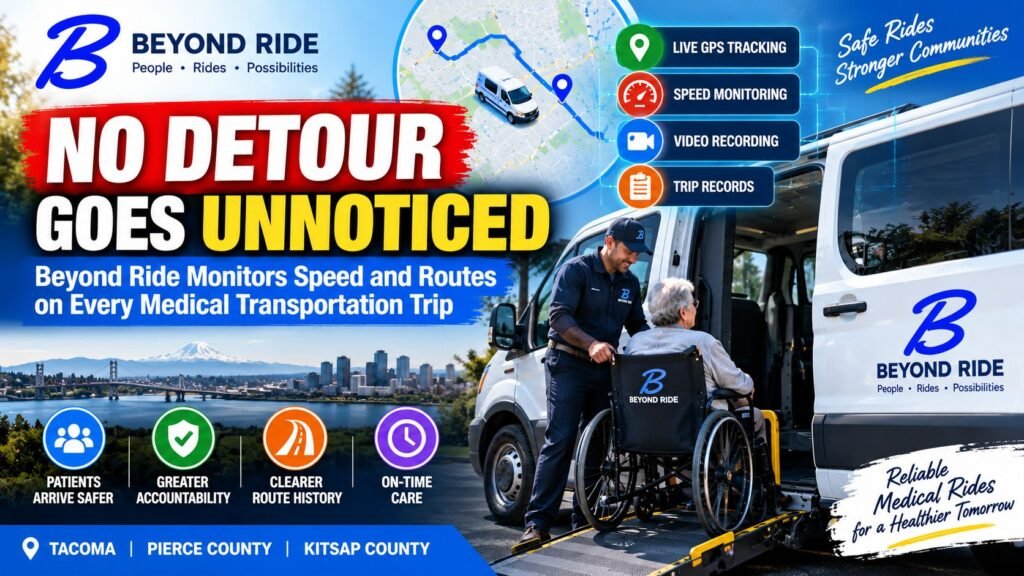
Beyond Ride Tracks Medical Transportation in Tacoma With GPS and Speed Monitoring
GPS tracking, driving alerts, and documented trip times help Beyond Ride review medical rides across Tacoma, Pierce County, and Kitsap County.
TACOMA, WA. Beyond Ride is documenting vehicle speeds, routes, and pickup and drop-off times for its medical transportation services, providing additional information when patients, families, or healthcare organizations raise questions about a journey.
In its September 11 announcement, the company outlined how Verizon Connect monitoring, driver records, and available video help management review delays, driving concerns, and route changes.
The process supports non-emergency medical transportation across Tacoma, Pierce County, and Kitsap County, where passengers may need wheelchair-accessible vehicles, boarding assistance, or recurring rides to treatment.
How Does GPS Tracking Support Medical Transportation in Tacoma?
Knowing where a vehicle is can help answer an immediate question for a waiting patient or healthcare facility: when will the ride arrive?
Beyond Ride says dispatch staff use real-time GPS information to follow vehicle movement toward pickup locations and destinations. Staff can review a vehicle’s position and recent route activity when responding to questions about a scheduled trip.
For patients attending dialysis, rehabilitation, therapy, or specialist appointments, that visibility can support coordination with the people expecting them. GPS information also provides a starting point for examining where a delay occurred.
Tracking does not prevent congestion or construction delays. Its practical value lies in helping staff understand the trip’s progress and communicate using current information.
How Are Speeding and Harsh Braking Alerts Reviewed?
Beyond Ride uses Verizon Connect to identify selected driving events, including speeding, sudden stops, and harsh braking. Certain events may have associated video that management can examine before determining whether corrective action is needed.
The company emphasizes that an automated alert requires context. A sudden stop could reflect a driver responding appropriately to a pedestrian, an unexpected road hazard, or another vehicle entering the lane.
Reviewing available footage alongside vehicle data can help distinguish a necessary response from driving that falls below expected standards. Beyond Ride says management can contact drivers and address identified concerns, allowing some issues to receive attention before a passenger submits a complaint.
What Do Pickup Times and Route Records Show?
Beyond Ride’s drivers record when passengers enter and exit the vehicle. GPS route history provides additional information about the journey between those events.
These records address different questions. A vehicle reaching a healthcare facility does not automatically establish that the passenger has boarded. Driver entries can help clarify that distinction when someone asks about waiting time, a missed pickup, or trip completion.
The company also documents no-shows on driver sheets with dates and times. Available location records and footage may support a review of whether the vehicle reached the scheduled pickup point.
Why Does Documentation Matter for Wheelchair Transportation?
Passengers using non-emergency medical transportation in Tacoma may need additional time or assistance during boarding and arrival.
Beyond Ride operates wheelchair-accessible vehicles and says its drivers assist passengers with mobility limitations, disabilities, dementia, and other support needs.
When concerns involve boarding assistance, communication, or driving behavior, trip documentation can help management examine what occurred. According to the company, timestamped vehicle video and audio recordings are retained in cloud storage for up to 60 days.
Those records may also help protect drivers when a complaint does not accurately describe an event.
Supporting Recurring Medical Rides Across Pierce and Kitsap Counties
Beyond Ride offers recurring transportation arrangements for dialysis, rehabilitation, therapy, and routine appointments. Reviewing repeated trips may help managers identify recurring delays or driving patterns that warrant attention.
For families and healthcare coordinators evaluating transportation services across Pierce and Kitsap counties, the announcement provides specific questions to ask about trip records, delay communication, and concern resolution.
Beyond Ride says its monitoring process is intended to provide a clearer account of each medical journey. Service inquiries can be directed to 360-300-2424.