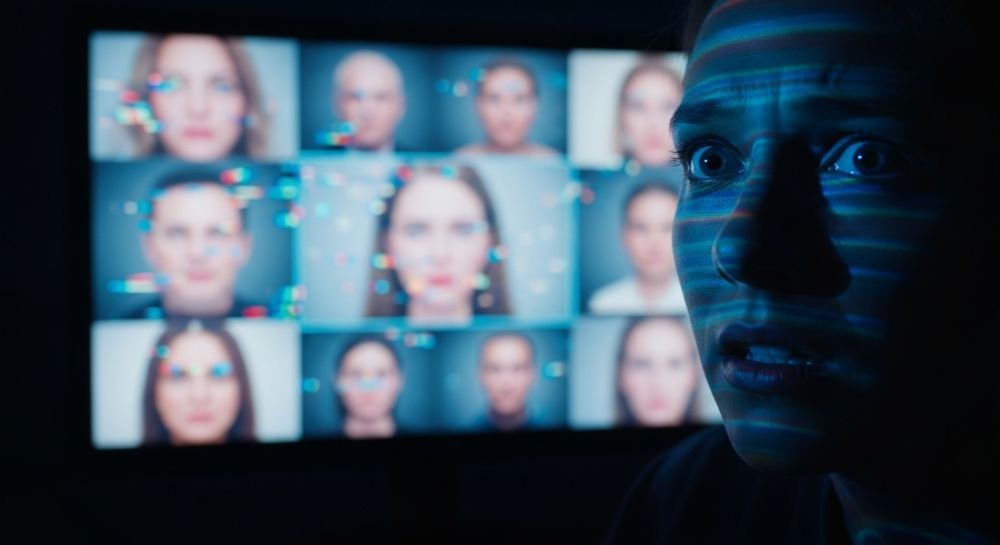
AI Porn Deepfakes Are Creating a New Trust Crisis Across the Internet
A new wave of AI generated pornography is beginning to erode trust in online visuals, raising concerns that the internet is entering a phase where video evidence can no longer be believed. The technology behind synthetic explicit media is becoming so advanced that even experts admit it is increasingly difficult to tell the difference between real and fabricated content.
A Threat That Goes Beyond Adult Content
As per AI researchers interviewed by major tech institutes, the same algorithms used to create pornographic deepfakes are also capable of fabricating news footage, political events, and social media clips. This overlap means that the spread of synthetic adult content is not just a problem for the porn industry. It is a problem for every corner of the internet that relies on visual proof.
As per cybersecurity analysts, once audiences learn that explicit imagery can be faked flawlessly, they start to question everything they see. This uncertainty is extending into journalism, legal investigations, medical misinformation, and even videos used as evidence in court.
The Collapse of Visual Trust
As per digital forensics experts, trust in video evidence has already become unstable. If a victim presents a real video of harassment or abuse, the accused can now respond with a simple claim that the footage is AI generated. This growing defense tactic has a name within legal circles: the “deepfake defense.”
As per MIT Technology Review, the deepfake defense is already affecting multiple countries. Judges and investigators are being forced to rely on lab testing, metadata analysis, and AI forensics rather than visual judgement alone.
This creates a dangerous path. If proof can be denied simply by suggesting it might be AI generated, accountability becomes harder to achieve.
A Perfect Tool for Manipulation
Pornographic deepfakes are often the first target because they spread quickly and generate emotional responses. As per digital safety reports, these fakes are increasingly used for blackmail, political sabotage, and cyber harassment.
As per the Electronic Frontier Foundation, the fear of becoming a deepfake victim is causing people to withdraw from online spaces. Women, in particular, are deleting social media photos or hiding their faces to prevent misuse.
Platforms Are Not Ready
As per statements from platform safety teams, detection systems are falling behind. AI generators are improving faster than the tools designed to identify them. Moderation teams say they are overwhelmed and cannot verify every flagged video manually.
This leaves millions of users vulnerable to synthetic media while companies struggle to find solutions that do not violate privacy rights or censor legitimate content.
The Internet After Authenticity
What worries analysts most is the cultural shift. Once the public loses trust in what they see, misinformation has an easier path. Distrust becomes the default response. And in a world where everything can be fake, bad actors gain power.
Experts argue that the core threat is not the synthetic content itself. It is the loss of confidence in digital truth.
If every image can be doubted and every video can be questioned, the internet risks becoming an information environment where facts have no foundation.
The rise of AI porn may be the catalyst, but the consequences will reach far beyond explicit content. The crisis of visual credibility is becoming one of the defining challenges of the AI age.