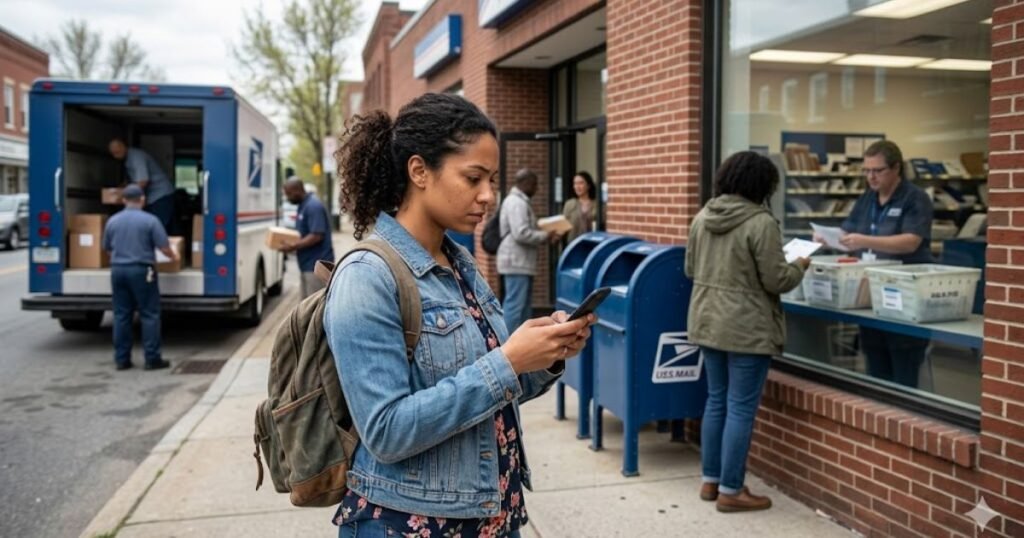
Abortion Pill Now Blocked From Mail in All 50 States – What Every Woman Needs to Know Right Now
By David Cooper | IAmericanTimes.com | May 4, 2026
A federal appeals court just issued the most sweeping abortion ruling since Roe v. Wade was overturned, and it affects women in every state, even where abortion is fully legal.
If you or someone you know has ever used, or planned to use, abortion medication through the mail or a telehealth appointment, everything just changed.
On May 1, 2026, a federal appeals court issued a ruling that experts are calling the biggest blow to reproductive rights in America since the Supreme Court overturned Roe v. Wade in 2022. The court blocked the mailing of mifepristone, the most widely used abortion pill in the United States, in all 50 states, including states where abortion is completely legal.
Here’s what happened, what it means for you, and what’s next.
What Did the Court Actually Rule?
The U.S. Court of Appeals for the 5th Circuit, based in New Orleans, unanimously ordered that mifepristone can no longer be mailed or prescribed through telehealth appointments anywhere in the country. The ruling reinstates an old requirement that the pill must be picked up in person at a certified clinic or doctor’s office.
This overturned a 2021 policy change by the Food and Drug Administration (FDA), which had allowed mifepristone to be prescribed via telehealth and delivered by mail. That policy had been in place for over five years.
The ruling came after Louisiana’s state attorney general sued the FDA, arguing that the ability to mail abortion pills undermined the state’s own abortion ban.
Why Does This Matter So Much?
To understand how significant this ruling is, consider these numbers:
- 63% of all abortions in the United States are now done using medication, not surgery. That’s up from just 44% in 2019.
- More than 7.5 million Americans have used mifepristone since it was approved by the FDA in 2000.
- 1 in 4 abortions nationally is currently prescribed through telehealth. All of those are now blocked.
- In 2025, 91,000 patients living in states with abortion bans received abortion pills through telehealth. For many of them, this was the only option available.
In states like Wyoming and Montana, medication abortions account for over 90% of all abortions performed. This ruling doesn’t just affect a few women, it affects the majority of people seeking abortion care across the country.
This Affects Women in ALL 50 States, Not Just States With Abortion Bans
One of the most surprising aspects of this ruling is its nationwide reach. Even women living in California, New York, Illinois, or any other state where abortion is fully protected by law can no longer receive mifepristone through the mail or a telehealth appointment.
“This is going to affect patients’ access to abortion and miscarriage care in every state in the nation,” said Julia Kaye, an ACLU attorney. “When telemedicine is restricted, rural communities, people with low incomes, people with disabilities, survivors of intimate partner violence” are the hardest hit.
The Guttmacher Institute, which tracks abortion data, described the ruling as representing “the most sweeping threat to abortion since the overturning of Roe v. Wade.” If the ruling stands, patients using mifepristone would be forced to travel, sometimes hundreds of miles, to a health center just to pick up a pill.
What Is Mifepristone and How Does It Work?
Mifepristone, sometimes called RU-486 or the “abortion pill,” was approved by the FDA in 2000. It is typically used alongside a second drug called misoprostol in a two-step process:
- The patient takes mifepristone first, which blocks a hormone needed for the pregnancy to continue.
- Twenty-four to 48 hours later, the patient takes misoprostol, which causes cramping that empties the uterus, similar to an early miscarriage.
The FDA approves this regimen for use within the first 70 days (10 weeks) of pregnancy. Decades of research have confirmed mifepristone is extremely safe. In fact, a CNN analysis found the drug has fewer reported side effects than common medications like Viagra or penicillin.
Is There Still Any Way to Get Abortion Medication?
The ruling specifically targets mifepristone. The second drug, misoprostol, is not covered by the ruling and may still be available through telehealth. However, misoprostol used alone is less effective and typically causes more side effects than the two-drug combination.
For women in states where abortion remains legal, in-person visits to clinics, hospitals, or certified physicians remain available. However, for women in rural areas, those without transportation, those with disabilities, or survivors of domestic violence, in-person access can be extremely difficult or impossible.
For women in states with abortion bans, the options are now severely limited.
What Happens to the Ruling Now? The Supreme Court Steps In
The drug manufacturers are fighting back, fast.
On May 2, 2026, just one day after the appeals court ruling, Danco Laboratories and GenBioPro, the two companies that make mifepristone, filed emergency appeals directly to the U.S. Supreme Court, asking the justices to immediately pause the lower court’s order.
The emergency filing was sent to conservative Justice Samuel Alito, who oversees the 5th Circuit. The companies argued the ruling “injects immediate confusion and upheaval into highly time-sensitive medical decisions.”
“Today, patients who planned to pick up a mifepristone prescription at their local pharmacy may no longer be able to do so, regardless of which state they live in,” the companies wrote in their filing.
The Supreme Court had previously ruled unanimously in 2024 to preserve access to mifepristone in a separate challenge. This new case puts the abortion pill back before the nation’s highest court.
Florida and Texas are separately pushing legislation to ban mifepristone entirely in their states, even for in-person dispensing.
The Political Fight Behind This Ruling
The 5th Circuit’s ruling did not come out of nowhere. It is the result of a years-long legal campaign by anti-abortion groups targeting the FDA’s regulation of mifepristone.
Louisiana’s attorney general filed the original lawsuit arguing that the FDA’s rules allowing telehealth and mail distribution violated the state’s own abortion ban and undermined its ability to enforce it.
Anti-abortion groups celebrated the ruling. Marjorie Dannenfelser, president of Susan B. Anthony Pro-Life America, called it a win, while also criticizing the Trump administration for not acting more aggressively to restrict the pill itself.
On the other side, Planned Parenthood Action Fund President Alexis McGill Johnson called the ruling a decision by “activist judges” that “upended countless lives.”
The Trump administration’s FDA has been conducting its own safety review of mifepristone, a review that critics say is designed to lay the groundwork for further restrictions. A federal court has ordered the FDA to report on the status of that review by October 7, 2026.
What Should You Do Right Now?
If you or someone you know relies on mifepristone or planned to use telehealth for abortion care, here is what experts recommend:
If you have an existing prescription: Contact your provider or pharmacy immediately to understand your options. The legal situation is moving quickly and providers are working to clarify what is and isn’t currently possible.
If you need abortion care now: Contact Planned Parenthood at plannedparenthood.org or call 1-800-230-PLAN to find the nearest in-person provider.
If you are in a state with an abortion ban: Telehealth options from out-of-state “shield law” providers may still be operating, but the legal situation is uncertain. Aid Access (aidaccess.org) and Plan C (plancpills.org) provide updated information on pill access by state.
If you used a telehealth service and have pills in transit: Consult your provider for guidance on your specific situation.
Monitor Supreme Court news: The emergency appeal filed May 2 means the Supreme Court could act within days to pause the ruling, or allow it to stand. This story is developing rapidly.
The Bottom Line
For the first time in over five years, American women, in every state, can no longer receive the most commonly used abortion medication through the mail or a telehealth appointment. The 5th Circuit’s ruling is the most significant restriction on abortion access since the Supreme Court overturned Roe v. Wade in 2022.
The fight now moves to the Supreme Court, which could act within days. What happens next will shape abortion access in America for years to come.
This is a developing story. IAmericanTimes.com will update this article as the Supreme Court responds to the emergency appeal.
Sources: U.S. Court of Appeals for the 5th Circuit ruling (May 1, 2026), NPR, CNN, CBS News, NBC News, TIME, Guttmacher Institute, ACLU, Families USA, KFF (Kaiser Family Foundation)