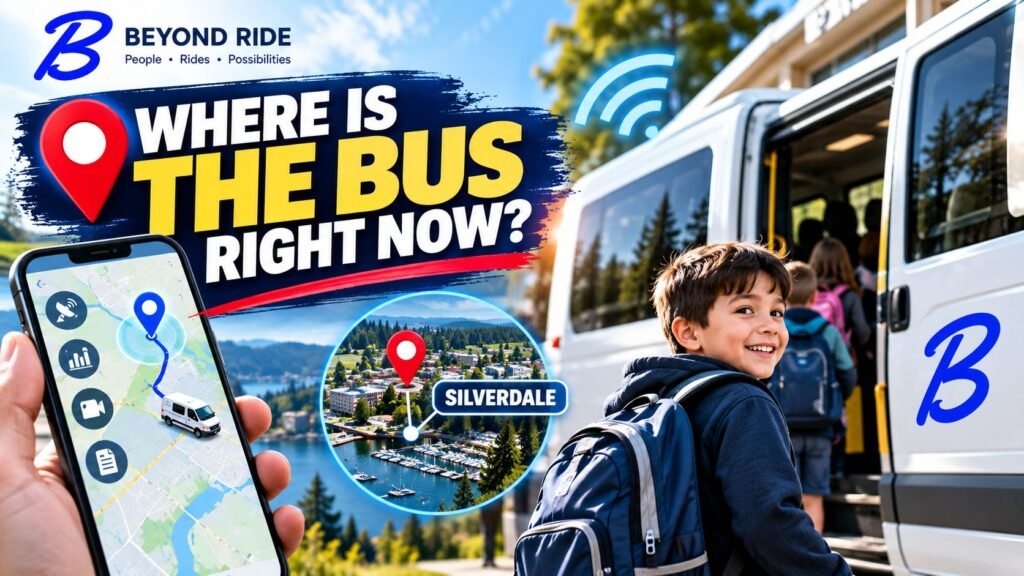
Beyond Ride Expands School Transportation Monitoring in Silverdale
Live GPS tracking, driver oversight, and trip documentation give schools more information about student journeys.
SILVERDALE, WA. Beyond Ride has announced an expansion of its fleet monitoring program in Silverdale, bringing greater visibility to school and specialized transportation services. In its September 25 announcement, the company described a system combining live vehicle tracking, driving performance reviews, in-cab driver monitoring, and recorded trip information.
What happens after a student leaves the pickup point?
A scheduled pickup tells a school when a journey should begin. An arrival confirms when it ended. The time between those events is where transportation questions often arise.
When a family asks about a delayed arrival, a useful response needs more than an estimated schedule. Vehicle location, route progress, and clear communication help explain what is happening and what the school should expect next.
Beyond Ride says authorized schools, fleet managers, and parents can check vehicle locations, routes, and stops during trips. Its Verizon Connect technology also tracks driving events such as speeding, hard braking, acceleration, and idling for management review.
How do trip records support accountability?
The company reports that its oversight includes driver activity monitoring, interior and exterior video and audio records, and pickup and drop-off documentation. Dispatch personnel communicate with appropriate contacts when delays or route changes affect service.
These tools serve different purposes. Live information supports decisions during a journey, while historical records help answer questions afterward. Their practical value depends on how a provider reviews information and responds to concerns.
What does the announcement mean for local schools?
Beyond Ride says the program supports students with disabilities and individualized transportation needs, including wheelchair-accessible services. GPS monitoring cannot prevent traffic or weather delays, but it can help make those disruptions visible.
For schools evaluating a provider, the announcement raises practical questions: Who receives delay updates? Who reviews driving alerts? What records are available when a trip needs clarification?
Those answers help administrators assess how transportation oversight works in daily service.