Beyond Ride Strengthens Student Transportation Safety With Fleet-Wide Monitoring
School districts vetting transportation providers typically stop at driver credentials, vehicle inspections, insurance, and regulatory compliance. But as more students travel through individualized transportation arrangements rather than a standard bus route, a different question is getting more attention from administrators: what actually happens inside the vehicle once a student gets in.
Beyond Ride, which handles student transportation across Tacoma, Kitsap County, and Pierce County, has laid out the driver monitoring framework behind its school transportation operations, an approach built to give districts visibility that goes beyond hiring-stage checks.
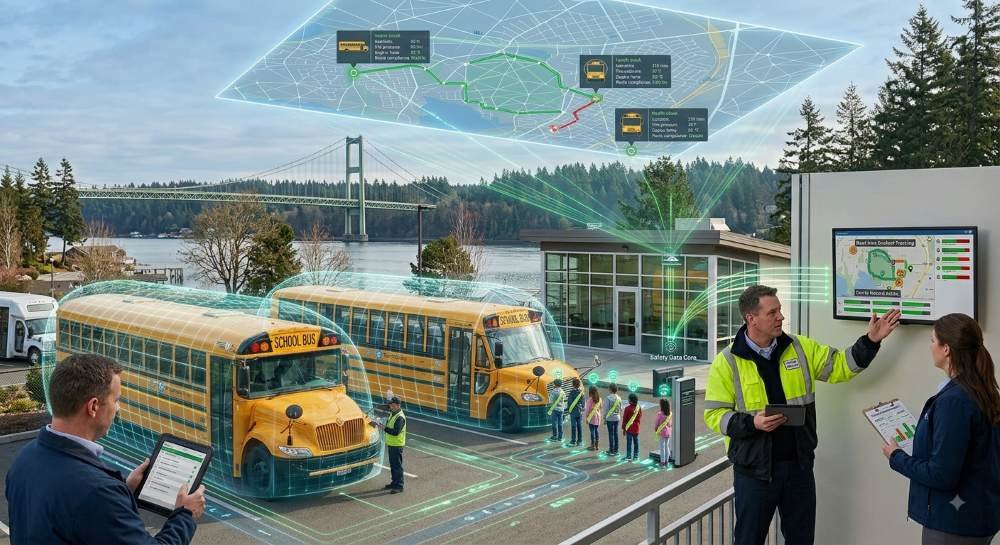
The system combines real-time GPS tracking, driver behavior monitoring, in-cab video monitoring, and trip documentation, covering every ride from pickup through drop-off.
Every vehicle carries live GPS tracking, so authorized school staff, transportation managers, and parents can check location, route progress, and stops as a trip happens. That same data builds a route history schools can reference later if questions come up about arrival times or a route change.
On the driving side, Beyond Ride uses Verizon Connect to flag events like speeding, harsh braking, rapid acceleration, excessive idling, sudden stops, and route deviations. Rather than treating every flag as a violation, transportation managers review the surrounding context, separating unsafe driving from a reasonable response to changing road conditions.
Driver oversight extends past the vehicle data itself. In-cab video monitoring, including driver action analysis and facial expression analysis, is part of the company’s broader safety program, paired with interior and exterior camera systems that record each trip. According to Beyond Ride, this footage can be reviewed if schools, administrators, or families raise questions about an incident or driver conduct. Pickup and drop-off logs and GPS route history round out the documentation, giving schools a fuller operational picture than arrival times alone.
Communication stays part of daily operations, too. When delays or unexpected issues come up, Beyond Ride says dispatch reaches out directly to schools and authorized family contacts.
The company frames this monitoring as a layer added on top of, not a replacement for, its screening process. Drivers complete drug testing and state and national background checks before transporting passengers, with ongoing monitoring providing oversight once employment begins. Vehicles are wheelchair-accessible, and drivers are trained to support students with disabilities and other individualized needs, including special education transportation across the region.
Beyond Ride’s non-emergency medical transportation work in Pierce and Kitsap counties, serving seniors and patients, has shaped some of these procedures, particularly around passengers with mobility limitations or medical needs.
Transportation conditions vary widely across the service area, from congested school-zone traffic and construction in Tacoma to longer, more limited-access routes in rural parts of Pierce and Kitsap counties. Beyond Ride says continuous monitoring doesn’t change those conditions, but it gives transportation managers more to work with when reviewing how drivers handle them.
As districts continue weighing transportation vendors, oversight practices are becoming as central to the conversation as licensing and compliance, how driving events are reviewed, how records are kept, and how communication holds up during disruptions.