Gas Prices Are Soaring Because of the Iran War, Here’s How Bad It’s Getting and When Relief Could Come
By David Cooper| IAmericanTimes.com | May 11, 2026
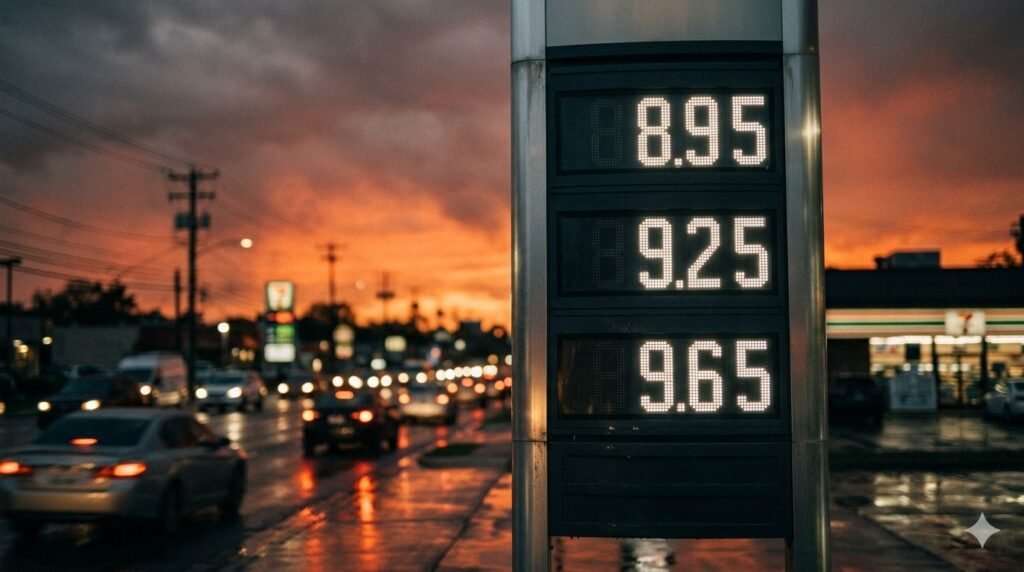
If you’ve pulled up to a gas station lately and felt your stomach drop, you’re not imagining it. Across the United States, gas prices have surged more than 50% since the U.S. and Israel launched military operations against Iran on February 28, 2026, and there’s no quick end in sight.
The national average now sits at more than $4.50 per gallon, up from just $2.98 before the war began, according to data from AAA. That’s the highest gas has cost Americans since July 2022. And in some states, it’s far worse.
Why Gas Prices Are This High Right Now
The answer comes down to one critical stretch of water: the Strait of Hormuz.
Roughly 20% of the world’s seaborne crude oil and liquefied natural gas travels through this narrow waterway in the Persian Gulf. When Operation Epic Fury, the U.S.-led military campaign against Iran, began, shipping through the Strait was effectively halted. The result was an immediate, massive shock to global oil supply.
With less oil flowing to refineries worldwide, the benchmark price of crude oil surged roughly 50% in just the first two weeks of the conflict. Gas prices followed right behind.
“When inventories are low and you can’t get oil out of the ground or out of the strait, you should expect prices to keep rising at least until demand capitulates and starts to contract,” Kevin Book, co-founder of the energy research firm ClearView Energy Partners, told NPR. “We may be weeks or even months, depending on how long the strait stays closed, from the peak of prices from this crisis.”
In total, the Brown University analysis found that Americans have collectively paid over $29.2 billion more for fuel since the war began than they otherwise would have, that works out to more than $223 per household across the entire country.
Which States Are Getting Hit the Hardest
Not all Americans are feeling the pain equally. Here’s where prices are worst right now:
- California: $6.06/gallon, the highest in the nation, up nearly 30% since the war began
- Hawaii: $5.64/gallon
- Washington: $5.61/gallon
- Oregon: $5.21/gallon
- Nevada: $5.15/gallon
- Illinois: near $5/gallon
Western states face additional cost pressure from stricter environmental fuel standards and higher state gas taxes, which amplify the effects of any price spike.
At the county level, the pain is even more stark. Kenton County in northern Kentucky has seen prices nearly double since the start of the war, rising $2.32 per gallon, bringing costs to $4.92/gallon, according to an NBC News analysis of AAA data. About 100 counties, mostly in Indiana and Ohio, have seen price increases of $2 per gallon or more since the conflict began.
The best-insulated areas have been parts of Georgia, where the state suspended its 33-cent-per-gallon gas tax for 60 days starting in mid-March, and parts of Nebraska, where increases have been kept below $1 per gallon.
It’s Not Just the Gas Pump
The Iran war’s fuel shock isn’t stopping at the gas station. Economists warn that higher energy costs are now rippling through the entire American economy, hitting your wallet at every turn.
Airline tickets and baggage fees are rising. Jet fuel prices have surged approximately 85% since the start of the war. United Airlines CEO Scott Kirby wrote in a memo to employees that if prices stayed at their current levels, it would mean an extra $11 billion in annual expense for jet fuel alone. Airlines have responded by raising baggage fees, United, JetBlue, and Southwest have all increased checked bag prices by $10 or more per bag. The collapse of Spirit Airlines, which shut down May 2, was accelerated directly by the war’s fuel cost impact.
Grocery bills are climbing. Grocery prices rose 2.9% in just the first four weeks of the conflict, according to consumer tracking data. Common items, body wash, toothpaste, shampoo, detergent, chocolate, coffee, diapers, have all seen increases. The reason: diesel fuel powers the trucks that move food from farms to stores, and fertilizer, which relies on natural gas as a primary ingredient, is getting more expensive. Nearly 60% of U.S. farmers say their finances are getting worse as a result.
Amazon and online shopping are getting pricier too. Amazon imposed a 3.5% “fuel- and logistics-related surcharge” on third-party sellers using its fulfillment services. Analysts say businesses of all sizes are facing the same dilemma: raise prices or absorb losses.
“Anything that’s put on a truck is going to cost more,” economist Mark Zandi told CBS News. “That goes from groceries to Amazon packages.”
Overall consumer price inflation reached 3.3% on an annual basis last month, the highest level since May 2024, driven largely by the energy price jump. Some economists now expect a key inflation gauge, the Personal Consumption Expenditures index, could hit 4% by year’s end, double the Federal Reserve’s 2% target.
What the White House Is Saying
President Trump has offered an optimistic forecast, promising that when the war ends, gas prices will “drop like a rock.” The White House called the price increases “temporary disruptions” stemming from the military operation, pointing to March job gains and some cooling in food prices as signs the broader economy remains solid.
However, Trump also said earlier in the conflict that he’s “not concerned” if gas prices go up, stating simply, “If they rise, they rise.”
Experts are less certain the bounce-back will be quick. “Our view is that full normalization will still take time, especially when it comes to supply chains, when it comes to energy capacity,” Lydia Boussour, a senior economist at EY-Parthenon, told CBS News, noting the “lingering impacts” of the war. Multiple economic forecasts agree that oil prices will likely remain above pre-war levels throughout the rest of 2026, even if the conflict ends soon.
The government has taken some steps to ease the pain. Between late March and late April, the Department of Energy released 17.5 million barrels of crude oil from the U.S. Strategic Petroleum Reserve. Several OPEC+ countries also agreed to increase production by 188,000 barrels per day starting in June.
When Could Prices Come Back Down?
The short answer: not anytime soon, and the timeline is tied entirely to what happens in the Strait of Hormuz.
As long as the waterway remains effectively closed and oil supply stays constrained, economists say prices will continue climbing or hold at elevated levels. Even once a ceasefire or peace deal is reached, supply chains and energy capacity won’t snap back overnight.
If crude oil prices breach their 2022 peak of $127 per barrel, or push toward the all-time high of $147, analysts warn the economic fallout could be severe. Goldman Sachs has already raised its estimate of a U.S. recession over the next 12 months to 30%.
The bottom line for most Americans: budget for high gas prices through the summer, and plan accordingly.
7 Ways to Cut Your Gas Spending Right Now
While you can’t control the price at the pump, you can control how much of it you’re buying. Here’s what actually works:
1. Use GasBuddy or Waze to find the cheapest gas near you. Prices can vary by 10–20 cents per gallon within the same neighborhood. A few minutes of searching before you fill up can save real money over a month.
2. Fill up on Sunday or Monday. Gas prices tend to be lower at the start of the week and rise heading into the weekend, according to AAA data.
3. Slow down on the highway. According to the U.S. Department of Energy, gas mileage drops sharply once speeds exceed 50 mph. Aggressive driving, hard acceleration and braking, can reduce your fuel efficiency by 15 to 30% on the highway. Simply maintaining steadier speeds can boost your MPG by up to 40%.
4. Check your tire pressure monthly. Underinflated tires increase rolling resistance, making your engine work harder. The National Highway Traffic Safety Administration says properly inflated tires can save you up to 11 cents per gallon, and only about 1 in 5 drivers actually does this.
5. Use a cash-back credit card for gas. Many cards offer 3–5% cash back on fuel purchases. At $4.50/gallon, that’s real money back each fill-up. Just pay the balance monthly so interest doesn’t wipe out the savings.
6. Take advantage of grocery store fuel rewards programs. Kroger, Kroger-affiliated stores (Fred Meyer, Dillons, Mariano’s), Giant, Hy-Vee, and others offer loyalty points redeemable for cents off per gallon. AARP members also get extra savings at Exxon and Shell.
7. Remove unnecessary weight from your vehicle. Extra cargo, roof racks, and gear you don’t need daily all reduce fuel efficiency. Lighter cars burn less gas, it’s that simple.
The Bottom Line
The Iran war is not just a foreign policy story. It is costing every American family hundreds of dollars right now, at the gas pump, the grocery store, the airline counter, and on every delivery that arrives at your door. Until the Strait of Hormuz reopens and global oil supply recovers, experts say meaningful relief is unlikely.
Keep an eye on peace talks, the Supreme Court’s review of the White House’s military authority, and AAA’s daily gas price tracker at gasprices.aaa.com for the most current numbers in your state.
Sources: AAA, NBC News, NPR, CBS News, U.S. News & World Report, Brown University, EY-Parthenon, ClearView Energy Partners, Center for American Progress, TIME, CNBC, California Governor’s Office, U.S. Department of Energy, Consumer Reports
EDITOR’S NOTE: This article was last updated May 11, 2026. Gas price data changes daily. Check AAA’s fuel gauge report for the most current figures in your area.