Local Police Can Now Scan Your Face for ICE – Here’s What That Means for Every American
A newly revealed government document is raising serious questions about privacy and police power across the United States, and it affects far more than just immigrants.
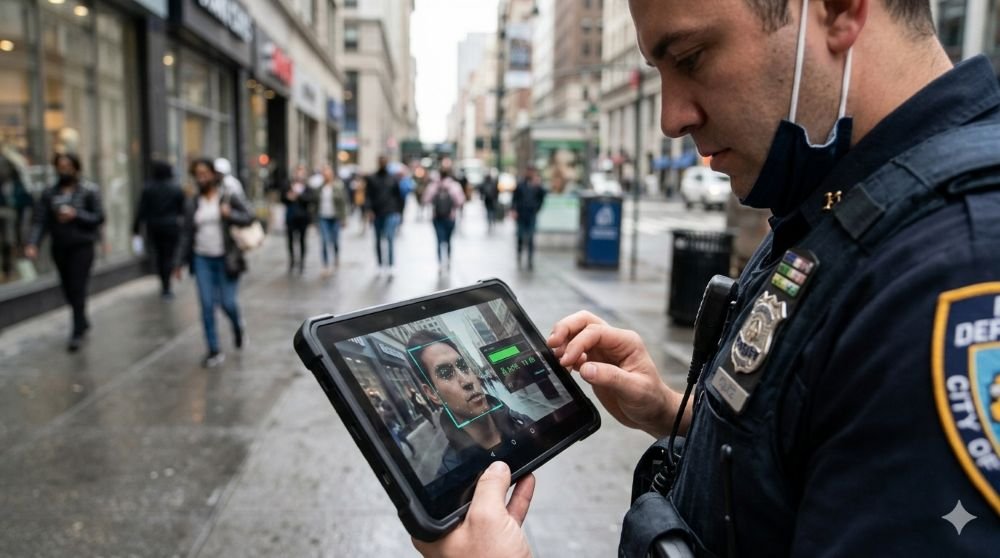
The Department of Homeland Security has confirmed plans to give local police departments access to a facial recognition tool originally built for federal immigration agents. The technology allows officers to scan the face of anyone they stop on the street. And once that scan happens, the photo can be stored by the federal government for 15 years.
Here is what is actually happening, and why it matters to you.
What Is This New Facial Recognition Tool?
Federal immigration officers have long used facial recognition technology to identify immigrants in the field. Now, a newly revealed DHS document outlines plans to give local police working on the agency’s behalf access to that same technology. The Washington Post
The document was first reported by the tech news outlet 404 Media. It is what’s called a Privacy Threshold Analysis, essentially a federal report assessing whether a tool’s privacy implications warrant further government study. The Washington Post
The tool itself is a mobile app called the ICE Task Force Module. It allows local police to scan the faces of people they stop in their communities, turning an ordinary traffic stop or street encounter into a federal identity check. CNN
This is part of a broader program called the Task Force Model, which gives local police the authority to arrest immigrants on ICE’s behalf during their routine police duties. There are about 1,300 police agencies participating in the Task Force Model nationwide. The Washington Post
Why This Could Affect U.S. Citizens, Not Just Immigrants
This is the detail that should concern every American, regardless of immigration status.
DHS’s own document acknowledges officers conducting immigration enforcement, whether federal or local, will not know a person’s citizenship status before they conduct a scan. The document states plainly: “It is conceivable that a photo taken by an ICE non-federal law enforcement officer using the TFM mobile application could be that of someone other than a removable individual, including U.S. citizens.” CNN
In plain English: the app cannot tell who is a citizen and who isn’t before it scans someone’s face. Anyone stopped by police participating in this program could have their face captured and stored, citizen or not.
And because every photo taken through the app is kept for 15 years, this suggests a long-term government record of citizens and immigrants alike. CNN
Privacy Experts Are Sounding the Alarm
Clare Garvie, deputy director of the Technology Law and Policy Program at New York University School of Law’s Policing Project, says the DHS analysis “raises more questions than I think it answers.” The Washington Post
The concerns go beyond identity checks during stops. Privacy experts told NPR that allowing local police to conduct this kind of surveillance could create a chilling effect on freedom of speech, if people begin to worry they will face repercussions for attending protests or for legally observing ICE activity in their communities. CBS News
That is not a hypothetical concern. This sort of surveillance already appears to be happening at the federal level. In places like Minnesota and Maine, community members observing ICE activity reported that federal immigration officers would take photos of their faces and license plates, and the officers would often already know personal information about them, including their names and where they live. CNN
The pattern has already shown up around active protests. Homeland Security Secretary Markwayne Mullin acknowledged at a congressional hearing this month that the agency has used facial recognition technology on protesters, and had been able to identify people who were present at protests in Oregon who were also at recent protests outside the Delaney Hall Detention Facility in Newark, New Jersey. U.S. Department of Justice
One technology law expert did not soften his warning. “It makes this sort of face surveillance ubiquitous on American streets,” he said. “I don’t think that Americans should tolerate law enforcement being able to scan anyone’s face at any time for any reason to try to determine their identity. This is the new form of ‘papers, please.'” U.S. Department of Justice
What DHS Is Saying in Response
DHS is defending the program as both legal and necessary for law enforcement.
In a statement to NPR, DHS said its law enforcement methods are constitutional: “Like other law enforcement agencies, ICE employs various forms of technology to investigate criminal activity and support law enforcement efforts while respecting civil liberties and privacy interests.” CNN
Beyond that statement, the agency has stayed quiet on the specifics. DHS declined to provide NPR with more insight about the app and exactly how it is used in the field. CNN
Why This Matters Right Now
This story lands at a tense moment for immigration enforcement nationwide. With ICE detention facilities like Delaney Hall in Newark already drawing organized protests, and facial recognition already documented at demonstrations in Oregon, the expansion of this technology to 1,300 local police departments represents a significant jump in scale. CNN
For everyday Americans, the practical question is simple: if you are stopped by police in a department that participates in this program, your face could be scanned, checked against federal immigration databases, and stored for 15 years, regardless of whether you are a citizen, a legal resident, or undocumented.
Whether you support stronger immigration enforcement or are concerned about surveillance overreach, the scale of this rollout, and the fact that the system cannot distinguish citizens from non-citizens before scanning, is something every American should understand.