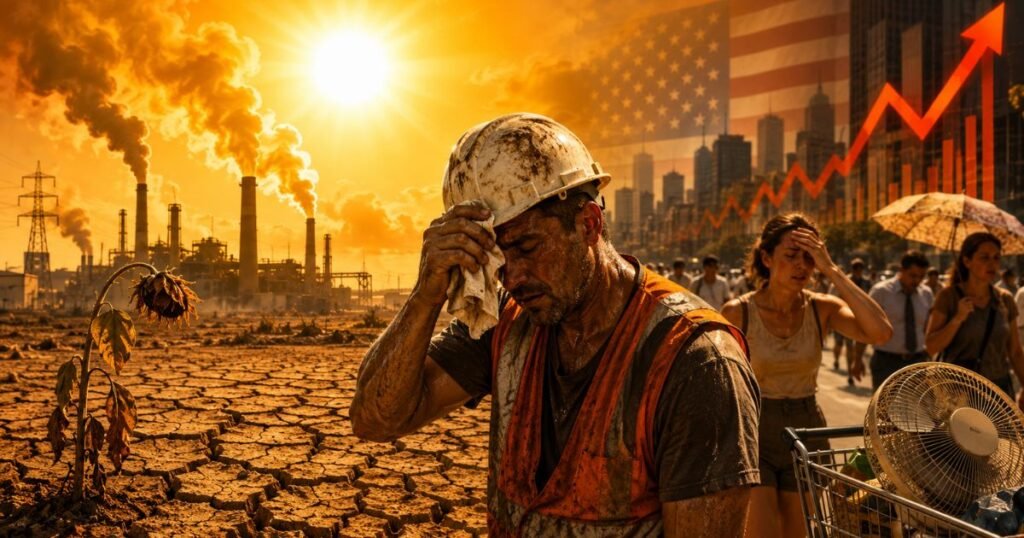
Why Extreme Heat Is Becoming a Bigger Economic Problem Across America
Extreme heat across the United States is no longer being viewed solely as a seasonal weather concern. Economists, healthcare systems, infrastructure planners, insurers, energy providers, and local governments are increasingly treating prolonged heat events as a growing economic challenge with long-term national consequences.
The financial impact of rising temperatures is expanding beyond electricity bills and summer discomfort. Heat waves are now influencing labor productivity, healthcare spending, transportation infrastructure, insurance risk calculations, agricultural performance, and urban planning strategies across multiple regions of the country.
Recent years have demonstrated how quickly extreme heat can pressure local economies. Cities once associated with manageable summer climates are now experiencing longer heat seasons, higher overnight temperatures, and increasing strain on public systems designed for earlier climate patterns.
As per source National Oceanic and Atmospheric Administration (NOAA), the United States has experienced a notable increase in heat-related climate extremes over recent decades, with several regions recording historically elevated temperature patterns. Researchers continue monitoring how persistent heat trends may affect infrastructure resilience and economic stability.
Extreme Heat Is Quietly Reshaping Business Operations
Many businesses across the United States are beginning to recognize that rising temperatures influence operational efficiency more directly than previously expected.
Construction industries, transportation companies, logistics providers, warehouses, manufacturing facilities, and agricultural operations often rely heavily on outdoor labor or temperature-sensitive environments. Higher temperatures increase worker fatigue, reduce productivity, and raise health risks during prolonged exposure periods.
The operational disruption extends into urban commercial sectors as well. Restaurants, retail centers, entertainment venues, and local service businesses frequently experience shifting customer behavior during severe heat events. Consumers may reduce outdoor activity, delay travel, avoid crowded public spaces, or spend differently during prolonged heat periods.
Energy demand surges are also creating new financial pressure for businesses attempting to maintain cooling systems while managing rising utility costs.
As per source U.S. Environmental Protection Agency, extreme heat contributes to increasing energy demand, particularly through air conditioning usage, which places additional pressure on electrical systems and operational expenses across urban environments.
Healthcare Costs Are Rising Alongside Temperatures
The healthcare dimension of extreme heat is becoming increasingly significant in economic discussions.
Heat-related illnesses can range from dehydration and exhaustion to cardiovascular complications, respiratory stress, kidney strain, and heat stroke. Elderly populations, outdoor workers, low-income communities, and individuals with existing medical conditions often face elevated vulnerability during prolonged heat exposure.
Hospitals and emergency services frequently experience increased demand during major heat events. Healthcare systems in several regions have already reported growing concerns regarding heat-related patient surges during summer months.
The economic impact extends beyond emergency treatment itself. Reduced workforce productivity, missed workdays, insurance pressure, and long-term public health management costs all contribute to the broader financial burden associated with rising temperatures.
As per source Centers for Disease Control and Prevention, extreme heat remains one of the leading weather-related causes of death in the United States, particularly affecting vulnerable populations during prolonged exposure periods.
American Infrastructure Was Not Built for Continuous Heat Pressure
One of the most important aspects of the current heat discussion involves infrastructure durability.
Roadways, rail systems, power grids, bridges, airports, and water systems were often designed around historical weather expectations that are increasingly shifting. Prolonged heat can weaken asphalt, strain electrical grids, impact rail expansion, reduce transportation efficiency, and increase maintenance costs.
Power infrastructure faces particularly intense pressure during major heat waves. Air conditioning demand rises sharply during prolonged high-temperature periods, increasing the risk of outages, grid instability, and emergency energy management challenges.
Several states have already experienced electricity conservation warnings during periods of extreme summer demand. Utility providers are now investing heavily in grid modernization efforts to prepare for future temperature-related stress.
As per source U.S. Department of Energy, rising temperatures and extreme weather events are increasing pressure on energy infrastructure resilience throughout the country.
Insurance Companies Are Paying Close Attention
Insurance providers are also adjusting their risk calculations as climate-related weather pressures intensify.
Extreme heat contributes indirectly to infrastructure deterioration, wildfire conditions, public health costs, and energy system strain. Insurance markets increasingly factor climate exposure into pricing models, property risk analysis, and long-term regional planning strategies.
The concern is not limited to coastal storms or flooding anymore. Persistent heat itself is becoming an operational risk category with measurable financial implications.
Several economists now believe climate-related heat exposure may gradually influence migration patterns, housing demand, urban development strategies, and business investment decisions over the next decade.
Urban Heat Is Creating New Economic Divides
Large metropolitan regions are experiencing another emerging challenge known as the “urban heat island” effect. Dense construction materials such as concrete, asphalt, and glass absorb and retain heat more aggressively than surrounding rural areas, often causing cities to remain significantly warmer overnight.
Communities with limited green space and aging infrastructure frequently experience the highest heat exposure levels. Lower-income neighborhoods often face additional pressure due to limited cooling access, older housing conditions, and higher energy vulnerability.
The result is an increasingly uneven economic burden where heat affects communities differently depending on infrastructure quality, income levels, and access to resources.
Urban planners across the United States are now discussing expanded tree coverage, reflective roofing systems, cooling centers, public shade investments, and redesigned infrastructure as part of long-term heat mitigation strategies.
The Economic Conversation Around Heat Is Changing
For many years, climate discussions were often framed primarily through environmental language. The national conversation is now evolving toward economic resilience.
Extreme heat is increasingly viewed as:
- a workforce issue
- a healthcare issue
- an infrastructure issue
- an insurance issue
- an energy issue
- a housing issue
- a business continuity issue
This broader framing is changing how local governments, corporations, investors, and policymakers evaluate long-term risk.
Financial analysts are beginning to examine how persistent heat could influence productivity, municipal budgets, utility investment, insurance markets, and regional economic competitiveness in future decades.
Why This Issue May Become More Visible Across America
The most important factor driving public attention is frequency.
Occasional heat waves were historically treated as temporary seasonal events. Persistent and repeated heat pressure changes public perception when residents, businesses, and institutions experience operational disruption year after year.
Americans are increasingly recognizing that extreme heat influences everyday life in practical ways that extend far beyond weather forecasts. Utility bills, transportation delays, healthcare costs, housing comfort, workplace conditions, and local infrastructure resilience are all becoming connected to rising temperature patterns.
The long-term economic implications remain complex, yet many experts agree that extreme heat is transitioning from an environmental discussion into a broader national economic issue that may shape policy, investment, urban planning, and public health priorities throughout the coming decade.
IAmericanTimes continues covering world news, United States developments, business trends, technology shifts, weather impact stories, and emerging societal changes shaping everyday life across America and beyond.