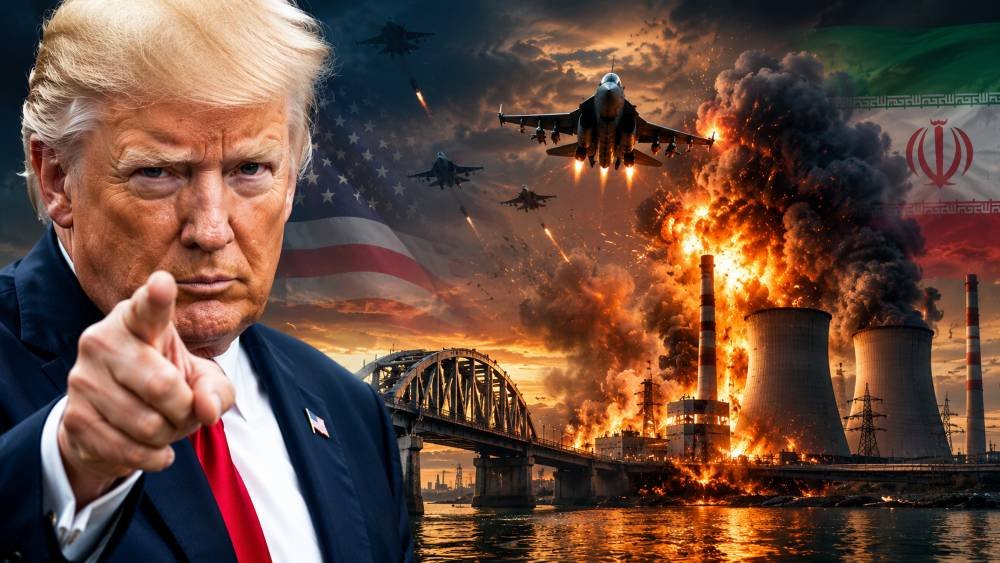
Trump Threatens to Hit Iran’s Bridges and Power Plants Next Week Unless Tehran Talks
Trump Is Now Threatening to Strike Iran’s Bridges and Power Plants. Here Is Everything That Changed in the Last 24 Hours.
The Iran war accelerated in almost every direction on Tuesday. Trump reversed a major economic decision, issued the most direct infrastructure threat of the war, froze $130 million in Iranian cryptocurrency, and warned Tehran that it won’t “have anybody left” if it refuses to negotiate.
Trump Drops the 20% Hormuz Toll
Monday’s biggest headline was Trump’s demand that all commercial ships pay a 20% fee on their cargo to pass through the Strait of Hormuz. By Tuesday afternoon, that demand was gone.
As per Fox News, Trump announced he is backing away from the 20% charge entirely, replacing it with what he called “Trade and Investment Deals that the various Gulf States will be making into the United States.”
As per Fox News, Trump wrote on Truth Social: “Oil is flowing like never before, thanks to the awesome Power of the United States Military.” He added that the strait is “open to ALL Ship traffic except for Iran,” and praised Defense Secretary Pete Hegseth and CENTCOM commander Admiral Brad Cooper for making it happen.
The reversal came less than 24 hours after the announcement and after significant international pushback. As per CNN, both the United Kingdom and the International Maritime Organization had publicly stated that passage through the strait must remain free of tolls and charges under international law, and China had demanded the restoration of “normal and safe passage.”
New Threat: Bridges and Power Plants “Next Week”
Even as he dropped the toll demand, Trump escalated the military threat significantly.
As per CNN, in an interview on Fox News on Tuesday, Trump warned that the US would strike bridges and power plants in Iran “next week” unless Tehran returns to the negotiating table. “Iran won’t have anybody left if it doesn’t make a deal,” Trump said.
As per CNN, this is not the first time Trump has threatened civilian infrastructure in Iran, and reporters noted he has frequently used aggressive warnings as a negotiating tactic without always following through. Still, the specificity of the warning, a named target category and a named timeline, marks an escalation in tone from any previous public statement.
Iran’s deputy foreign minister, Kazem Gharibabadi, responded quickly. As per CNN, Gharibabadi said Tehran has “no obligations” to the 14-point agreement with the US that was reached last month, effectively declaring the framework that underpinned the ceasefire null and void from Iran’s side as well.
Fourth Consecutive Night of US Strikes
The rhetorical escalation was matched by military action.
As per CNN, attacks were reported across the region as the US launched and completed another day of strikes on Iranian targets on Tuesday. As per Al Jazeera, the strikes included a first-of-its-kind attack in which the US struck an Iranian ship using drone boats, a significant tactical development in how the US is conducting the war at sea.
As per CNN, Iranian state media reported that Tehran struck US military assets in Jordan in response. A US strike in southern Iran also killed three members of a park ranger’s family, according to Iranian Foreign Ministry spokesperson Esmaeil Baghaei.
As per Fox News, Israeli Prime Minister Benjamin Netanyahu added to the warnings on Tuesday, saying: “Don’t count on a replay. It will be a different broadcast, one far more powerful.” Netanyahu added that Israel is “prepared for every scenario” and that “the days when someone can attack us without paying a heavy price are over.”
$130 Million in Iranian Crypto Frozen
One of the most unusual escalations of the day came not from a missile or a blockade but from a digital wallet.
As per CNN, the Trump administration froze more than $130 million in cryptocurrency it says is linked to Iran. Treasury Secretary Scott Bessent confirmed the move, which targeted digital wallets said to be linked to the Central Bank of Iran.
As per CNN, the Treasury Department also sanctioned more than 50 targets allegedly tied to an Iranian sanctions evasion network. A source familiar with the matter said Tether, a major digital currency company that facilitates crypto transactions globally, was directly involved in executing the freeze.
The move reflects a broader strategy of economic warfare alongside the military campaign. As per CNN, the frozen cryptocurrency comes as the memorandum of understanding between the US and Iran meant to end the war has completely collapsed, and the administration has imposed a series of financial sanctions in recent days while simultaneously escalating airstrikes.
Senate Democrats Block the Defense Bill Over Iran
Back in Washington, the war is creating new political fault lines inside Congress.
As per CNN, Senate Democrats blocked the annual defense policy package on Tuesday, a must-pass piece of legislation that typically passes with large bipartisan support, citing their objections over the war in Iran. The move was extraordinary: the defense bill has passed every year for more than six decades without interruption.
Meanwhile, the House is preparing its own Iran-related vote. As per CNN, the US House of Representatives will vote next week on a budget resolution that would set the stage for Trump’s third agenda package, which GOP leaders are aiming to use to fund the Iran war. The administration has requested approximately $87.6 billion to cover war funding and other Pentagon priorities.
Iran and Hezbollah Could Be Added to Russia Sanctions Bill
In a development that could dramatically expand the legal and financial pressure on Tehran, Trump signaled Tuesday that Iran and Hezbollah may be added to a sanctions bill originally designed to pressure Russia over its war in Ukraine.
As per Fox News, when asked about the bipartisan Russia sanctions bill that the late Senator Lindsey Graham had championed, Trump said: “I think they may be adding Iran to it. They’re going to add Iran, which is a very big thing if they did that. They may add Hezbollah too. So we’re looking at that.”
If passed with Iran and Hezbollah included, the bill would represent one of the broadest packages of US financial pressure on Tehran in history, layering new sanctions on top of the cryptocurrency freeze, the existing oil embargo, and the reinstated naval blockade all at once.
Where Things Stand Right Now
As of the evening of July 14, 2026, here is the complete picture of where the US-Iran war stands:
The naval blockade of Iranian ports is now active and in effect. US forces have struck Iran for four consecutive nights. Trump has threatened to hit bridges and power plants next week if Iran does not negotiate. Iran has declared the ceasefire framework null and void. $130 million in Iranian crypto has been frozen. Senate Democrats have blocked the defense bill over the war. The House is preparing an $87.6 billion war funding vote for next week. And Netanyahu has warned Israel is “prepared for every scenario.”
As per Fox News, Trump said on Tuesday: “This is what they’ve done for 47 years. The difference is nobody negotiated like I do.”
The coming week will determine whether that confidence is justified or whether the war is about to enter its most dangerous phase yet.