Trump Threatens to Strike Iran’s Secret Nuclear Mountain as War Escalates Again
The ceasefire is over. The naval blockade is back. And President Trump is now threatening to blow up a heavily fortified underground nuclear site buried 330 feet inside an Iranian mountain.
The US-Iran war escalated sharply overnight into Tuesday, with American forces launching strikes against Iran for the third consecutive night, Iran attacking commercial ships in the Strait of Hormuz, and Trump issuing some of the most explicit military threats of the entire conflict. Here is everything that is happening right now, and what it means for every American.
The Ceasefire Has Completely Collapsed
To understand where things stand today, you need to understand what just fell apart.
As per The National, a ceasefire established on April 8 had been repeatedly tested throughout the conflict. As per CNN, the implementation of the US-Iran ceasefire had been subject to “recurrent and significant violations, creating again, a high level of risk across the Gulf region” in recent weeks.
As per The Epoch Times, Trump declared the ceasefire with Iran officially over last week after Iran attacked merchant shipping in the Strait of Hormuz. Since then, US and Iranian military forces have exchanged heavy missile and drone attacks over the weekend and into Monday, marking the sharpest escalation in the conflict in weeks.
As per Fox News, US Central Command completed its latest wave of strikes against Iran at 10:15 p.m. ET on July 13. More than 50,000 US service members remain deployed across the Middle East.
Trump’s Warning: “Tell the Iranians to Be Ready”
Monday brought the most explosive rhetoric of the war from the president himself.
As per Al Jazeera, during a live interview on the Hugh Hewitt Show, Trump issued a direct public warning about a site that most Americans had never heard of before this week. “We’re going to take out Pickaxe Mountain. Tell the Iranians to be ready,” Trump said.
He did not stop there. As per The Hill, Trump added: “We’re going to hit them very hard tonight, and we’re going to hit them hard tomorrow. And there’s not a damn thing they can do about it.”
As per The National, Trump also told a separate news channel: “Pickaxe is a possible target for a nice big, fat shot right in the front door. We’ll probably give Pickaxe a shot relatively soon.”
As per CNN, a senior security source in Tehran responded that Iran would deliver a “devastating response” if Trump goes through with the threat. The source also said US claims that nuclear activities are taking place at Pickaxe Mountain are false, and that Iran “will not back down from defending the rights of the Iranian people.”
What Is Pickaxe Mountain and Why Does It Matter
This is the site now at the center of the most dangerous moment of the conflict.
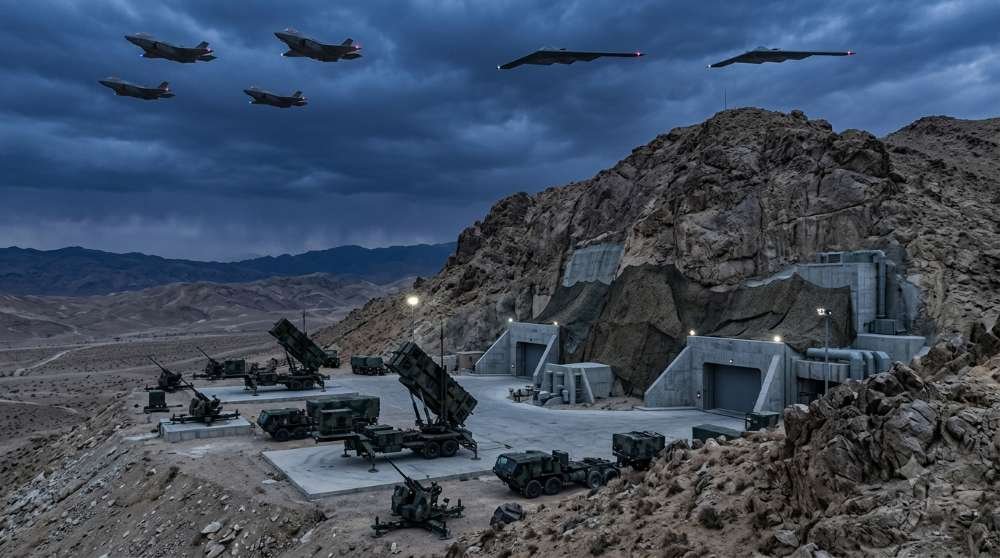
As per The National, Pickaxe Mountain, known in Farsi as Kuh-e Kolang, is an underground complex built into a mountain located about one mile south of Iran’s Natanz uranium enrichment plant in central Iran. As per The Epoch Times, the complex is buried approximately 330 feet below ground, making it one of the most heavily protected sites in Iran.
As per Al Jazeera, the site was declared to the United Nations International Atomic Energy Agency in 2020 as a future facility to assemble and manufacture advanced centrifuges. Iran has maintained that position ever since. But Western intelligence agencies have a very different view.
As per the Foundation for Defense of Democracies, intelligence agencies suspect Tehran is building a secret, undeclared uranium enrichment facility at Pickaxe Mountain that would serve as a “strategic hedge” for its nuclear program. The IAEA has never been allowed inside to verify Iran’s claims.
As per Institute for Science and International Security satellite imagery, analyzed in June 2026, the site was “largely accessible and open and under ongoing construction” and not yet believed to hold enriched uranium or operating facilities. But as per CNN, satellite imagery from February 10, 2026 showed Iran actively hardening tunnel entrances at the underground complex before the war began.
The depth of the facility raises a serious military question that weapons experts have not yet answered publicly: as per The National, some analysts doubt whether even the US military’s most powerful bunker-buster bombs would be sufficient to destroy a plant built that far underground.
The Naval Blockade Is Back
Trump’s strike threats were not the only major escalation on Monday.
As per Fox News, US Central Command announced that at President Trump’s direction, American forces will “resume blockading maritime traffic entering and exiting Iranian ports” starting at 4 p.m. ET on Tuesday, July 14. The blockade applies to all Iranian ports, both inside and outside the Strait of Hormuz.
As per Fox News, during the first US naval blockade, which ran from April 13 to June 18, CENTCOM forces redirected more than 140 compliant vessels, disabled nine non-compliant ships, and allowed over 50 commercial vessels carrying humanitarian aid to pass through. The USS George H.W. Bush, carrying more than 60 aircraft, helped enforce that first blockade.
As per CNN, Trump also announced the US will impose a 20% fee on cargo moving through the Strait of Hormuz. “It’s for the US to compensate for all costs necessary to do the job of providing safety and security to this very volatile section of the world,” Trump said.
That demand has already sparked an international backlash. As per CNN, the United Kingdom reiterated on Tuesday that the Strait of Hormuz should reopen “without tolls or charges” and that any arrangements must be in line with international law. As per Fox News, China’s foreign ministry spokesperson called on “relevant parties to remain calm and exercise restraint” and demanded that “normal and safe passage at the Strait” be restored.
As per the International Maritime Organization, passage through the strait “should remain free of any tolls and charges, in accordance with international law.”
Iran Is Hitting Back Hard
Iran has not absorbed the renewed American strikes quietly.
As per CNN, Iran’s Islamic Revolutionary Guard Corps announced over the weekend that it had closed the Strait of Hormuz after firing a warning shot at a vessel it said was using an unauthorized route. As per CNN, Iranian forces also targeted two UAE tankers in the Strait of Hormuz and attacked US regional allies as the overnight conflict escalated.
As per Fox News, the Bahrain Defence Force announced Tuesday that its air defense systems “intercepted and destroyed a number of treacherous Iranian aerial aggressions” that morning, calling Iran’s actions a “systematic hostile approach through its sinful aggressions targeting civilians.”
As per Al Jazeera, Iranian media reported explosions across several southern locations, including the islands of Kish, Qeshm and Abu Musa, as well as the cities of Bandar Abbas and Jam, following the latest US strikes. Iranian authorities reported four people injured in attacks targeting areas in the southwestern city of Omidiyeh.
As per Al Jazeera, the Islamic Revolutionary Guard Corps accused Washington of responsibility for “the return of insecurity” to the region.
What It Means for Your Gas Prices and Your Wallet
Every escalation in this conflict has a direct price attached to it, and ordinary Americans are the ones paying.
As per CNN, global oil prices rose sharply following the collapse of the ceasefire and the threat to resume the blockade. Benchmark Brent crude rose by its highest level since June 12 on Tuesday morning.
As per The Epoch Times, Trump acknowledged that any country doing business with Iran will not be able to get through the strait under the reinstated blockade. The last time the blockade was in place, the disruption to global oil supply drove US gas prices significantly higher and contributed to the inflation surge that pushed the Consumer Price Index to 4.2% in May.
With the blockade resuming and new strikes underway, economists are already warning that the gains made in June, when gas prices briefly stabilized after the first ceasefire, are at serious risk of being wiped out entirely.
Where Things Stand Right Now
As of Tuesday, July 14, the situation is:
US forces are striking Iran for the third consecutive night. The naval blockade of Iranian ports has officially resumed as of 4 p.m. ET today. Trump has publicly threatened to bomb Pickaxe Mountain, a fortified underground nuclear site that has never been inspected by international monitors. Iran has vowed a devastating response if that strike happens. Oil prices are rising. Global allies including the UK, China, and international shipping bodies are pushing back against Trump’s demand for a 20% toll on Strait of Hormuz cargo.
As per Fox News, Trump summed up his position at a press conference Monday: “This is what they’ve done for 47 years. The difference is nobody negotiated like I do.”
Whether that approach ends this conflict or deepens it is the question that the entire world is now watching in real time.