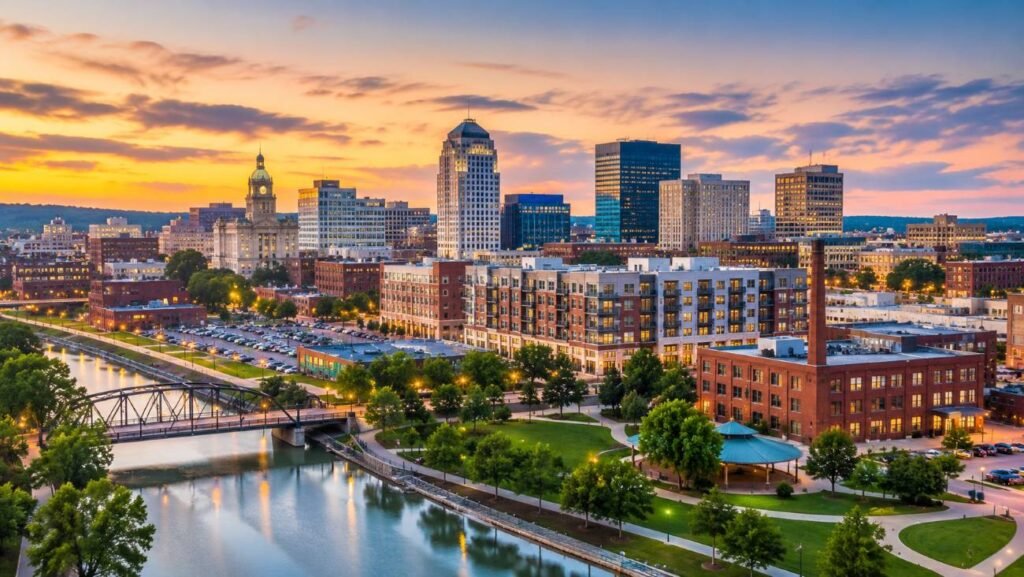
Why Mid-Sized American Cities Are Growing Faster Than Expected
A major demographic and economic shift is quietly reshaping communities across the United States. Mid-sized American cities that once received relatively limited national attention are now experiencing accelerated population growth, expanding business investment, rising housing demand, and increased workforce migration at levels many analysts did not fully anticipate only a few years ago.
The transformation is unfolding across multiple regions simultaneously. Cities previously viewed as secondary economic markets are becoming increasingly attractive to professionals, entrepreneurs, families, remote workers, retirees, and investors searching for affordability, stability, and lifestyle flexibility in an increasingly expensive national economy.
The trend is no longer isolated to one geographic region. Communities throughout the Midwest, Southeast, Mountain West, and portions of the Pacific Northwest are seeing noticeable changes in housing development, infrastructure planning, local business expansion, and workforce demographics.
The broader movement reflects a combination of economic pressure, technological change, lifestyle recalibration, and evolving workplace structures that are fundamentally altering how Americans evaluate where they want to live.
Remote Work Helped Redefine Geographic Flexibility
One of the most significant drivers behind mid-sized city growth has been the normalization of remote and hybrid work structures.
For decades, many high-paying professional careers required physical proximity to major metropolitan business centers such as New York City, Los Angeles, Chicago, San Francisco, or Seattle. Remote work disrupted that long-standing geographic dependency.
Millions of workers discovered they could maintain professional employment while living outside the country’s most expensive urban centers. That realization dramatically changed residential decision-making across many industries.
As per source reporting from Pew Research Center, remote and hybrid work patterns continue influencing where Americans choose to live, particularly among professionals seeking improved affordability and quality of life.
Mid-sized cities began benefiting from:
- lower housing costs
- reduced traffic congestion
- lower daily living expenses
- expanded living space
- shorter commute times
- growing local business ecosystems
The flexibility created by remote work gave many Americans an opportunity to reconsider whether large metropolitan living still justified rising financial pressure.
Housing Costs Are Reshaping Migration Patterns
The housing affordability crisis inside many major U.S. metropolitan regions has accelerated migration toward smaller and mid-sized cities.
Rising mortgage rates, elevated rent prices, insurance increases, and property tax pressure have made large urban markets increasingly difficult for many middle-class households. Families seeking homeownership opportunities are now exploring cities that previously received far less national migration attention.
Several mid-sized cities now offer a combination of:
- relatively affordable housing
- expanding infrastructure
- improving healthcare systems
- educational opportunities
- access to outdoor recreation
- growing employment markets
As per source analysis from Redfin, affordability remains one of the strongest drivers influencing relocation decisions among American households. Cost-sensitive migration patterns continue affecting housing demand across secondary markets.
This movement is beginning to reshape local economies.
Communities once considered slower-growth regions are now seeing increased residential construction, retail expansion, hospitality investment, and service-sector growth as population inflows continue rising.
Businesses Are Following Population Movement
Corporate and entrepreneurial behavior is also shifting alongside population migration.
Businesses increasingly recognize that workforce recruitment challenges are becoming easier to manage in regions offering lower living costs and improved lifestyle flexibility. Several companies are expanding operations into mid-sized cities where commercial real estate remains less expensive and labor competition is less concentrated than in larger metropolitan markets.
Local startup ecosystems are also beginning to emerge in areas previously overlooked by national venture capital conversations.
Technology entrepreneurs, healthcare companies, logistics operators, manufacturing firms, and service-based businesses are increasingly exploring growth opportunities in cities where operational costs remain more manageable.
As per source reporting from U.S. Census Bureau, population growth across many mid-sized regions has contributed to increased economic activity, business development, and infrastructure planning in multiple states.
This economic decentralization may eventually become one of the defining structural changes of the post-pandemic American economy.
Infrastructure and Quality of Life Are Becoming Competitive Advantages
Many mid-sized cities are benefiting from infrastructure advantages that were historically overshadowed by larger metropolitan regions.
Improved internet connectivity, regional airport expansion, healthcare development, modern logistics networks, and digital commerce infrastructure are allowing smaller urban markets to compete more effectively for both residents and businesses.
Quality of life has also become a major factor.
A growing number of Americans are prioritizing:
- personal space
- safety
- community stability
- family-oriented environments
- outdoor access
- reduced stress levels
- shorter commute expectations
These priorities intensified following years of economic uncertainty, pandemic disruption, rising inflation, and workplace burnout discussions.
Several mid-sized cities are increasingly marketing themselves not simply as affordable alternatives, but as sustainable long-term lifestyle destinations.
Growth Is Creating New Economic Opportunities and New Pressure
Rapid expansion is also generating new challenges.
Increased migration can place pressure on:
- local housing supply
- transportation infrastructure
- healthcare systems
- school capacity
- utility networks
- traffic management
- community affordability
Some mid-sized cities are already experiencing concerns surrounding rising property values, rent increases, labor shortages, and infrastructure strain as demand accelerates faster than local planning systems anticipated.
Economic success can quickly create affordability problems if housing development and infrastructure investment fail to keep pace with population growth.
Urban planners and local governments are increasingly facing difficult questions about how to preserve community identity while supporting long-term economic expansion.
The Definition of American Growth Is Quietly Changing
The broader significance of this migration trend extends beyond population statistics alone.
For decades, economic dominance in the United States remained heavily concentrated around a relatively small number of major metropolitan regions. The current shift suggests economic activity may become more geographically distributed over time.
Digital connectivity, remote employment systems, e-commerce infrastructure, and changing lifestyle priorities are weakening some of the historical advantages previously held by America’s largest cities.
The rise of mid-sized cities may ultimately create:
- more regional economic diversification
- expanded entrepreneurship opportunities
- reduced mega-city congestion
- broader workforce distribution
- stronger secondary business markets
Several analysts believe this decentralization trend could continue throughout the next decade as technology further reduces geographic barriers to professional opportunity.
Younger Families Are Driving Long-Term Change
Demographic behavior among younger families is becoming especially important in understanding the long-term sustainability of this trend.
Many younger professionals entering family-building years are prioritizing affordability and long-term financial stability over proximity to traditional urban prestige markets. Rising childcare costs, housing pressure, student loan obligations, and economic uncertainty are influencing how younger Americans evaluate city selection.
Mid-sized cities offering:
- family-oriented neighborhoods
- homeownership potential
- employment flexibility
- community accessibility
- educational opportunities
are becoming increasingly attractive alternatives.
This demographic shift could reshape future political influence, business investment patterns, local education systems, and infrastructure development across multiple regions of the country.
A Quiet National Transformation May Already Be Underway
The rapid growth of mid-sized American cities reflects more than temporary migration behavior. The trend represents a broader redefinition of how Americans view work, lifestyle, economic security, and long-term opportunity.
Technological flexibility, financial pressure, changing social priorities, and evolving business structures are collectively reshaping the geographic landscape of the United States in ways that may become increasingly visible throughout the coming decade.
The next generation of economic growth may no longer be concentrated exclusively inside America’s largest urban centers. Increasingly, growth appears to be spreading outward into communities that once existed largely outside the national spotlight.
IAmericanTimes continues covering world news, United States developments, business transformation, economic shifts, technology trends, and emerging stories shaping the future of modern American life.