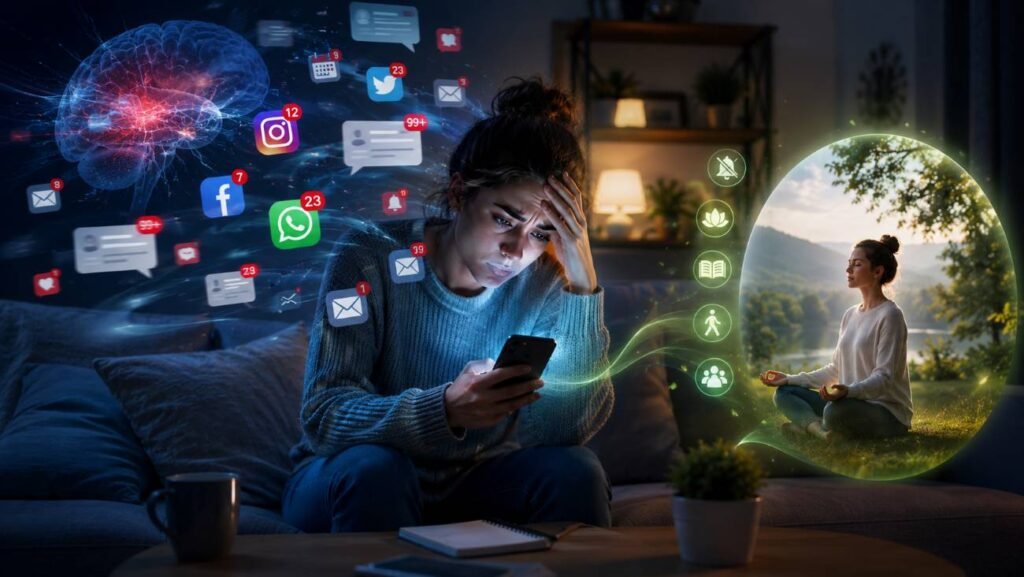
The Psychological Effect of Endless Notifications Is Getting More Attention, How to Overcome That?
The modern smartphone was originally introduced as a communication tool designed to improve convenience and connectivity. Over time, the digital ecosystem surrounding mobile devices evolved into a continuous stream of alerts, reminders, recommendations, updates, marketing prompts, social engagement signals, and algorithmically timed interruptions. The psychological consequences of that transformation are now attracting increasing attention from researchers, mental health experts, educators, and workplace analysts across the United States and around the world.
A growing body of discussion within behavioral science suggests that constant notifications may be influencing attention spans, emotional regulation, stress response patterns, sleep quality, workplace productivity, and even long-term cognitive habits. The issue extends beyond simple distraction. Many experts now believe endless notifications may be reshaping how humans process anticipation, urgency, emotional validation, and mental recovery.
Notifications Are Competing for Human Attention at Industrial Scale
Modern digital platforms operate within an economy built around attention retention. Every application competes for user engagement through alerts designed to trigger immediate interaction. Social media platforms, messaging applications, shopping apps, streaming services, financial platforms, workplace communication tools, and news systems all seek repeated access to the user’s focus throughout the day.
This constant interruption environment creates psychological fragmentation that many users underestimate.
As per source “American Psychological Association,” repeated digital interruptions can contribute to elevated stress perception, reduced concentration quality, and increased mental fatigue. Researchers continue studying how constant task-switching affects emotional stability and cognitive performance.
Unlike traditional communication patterns, modern notification systems are often algorithmically optimized to maximize engagement timing. Notifications are no longer limited to important communication. Many are intentionally engineered to stimulate curiosity, urgency, emotional response, or fear of missing out.
That behavioral engineering has quietly transformed millions of smartphones into persistent attention-demand systems.
The Brain Responds to Notifications as Potential Rewards
Behavioral psychologists increasingly compare notification behavior to variable reward systems.
The uncertainty attached to incoming notifications activates anticipation pathways in the brain. A message could represent social validation, emotional reassurance, financial opportunity, entertainment, conflict, or new information. The unpredictability itself strengthens compulsive checking behavior.
As per source “Harvard Business Review,” intermittent digital rewards can reinforce repetitive checking patterns similar to behavioral conditioning systems observed in gambling psychology and habit reinforcement models.
The result is not simply distraction. The larger consequence involves continuous mental alertness.
Many individuals now experience low-level psychological vigilance throughout the day, even during periods of supposed rest. Silence itself can begin feeling unusual after prolonged notification exposure. That constant anticipation gradually reduces opportunities for mental decompression.
Emotional Fatigue Is Becoming More Common
Mental exhaustion associated with digital overload is becoming a broader public conversation.
Workplace professionals increasingly report difficulty maintaining sustained concentration without checking devices. Students often struggle to complete uninterrupted reading or study sessions. Families report more fragmented communication patterns during shared personal time. Sleep researchers are also examining how nighttime notification exposure affects nervous system recovery and sleep quality.
As per source “Sleep Foundation,” nighttime smartphone interruptions and blue light exposure can negatively affect melatonin production, sleep consistency, and overall rest quality.
The emotional dimension of notification overload may be even more significant than the productivity impact.
Endless notifications create a persistent sense of unfinished obligation. Every unread message, missed alert, or delayed response can generate subtle psychological pressure. Over time, this environment contributes to emotional overstimulation and cognitive fatigue.
Some mental health professionals are now using terms such as notification anxiety, digital exhaustion, and continuous partial attention to describe modern attention fragmentation patterns.
Social Validation Loops Are Intensifying the Problem
Social media platforms intensified notification dependency by connecting alerts directly to emotional validation.
Likes, comments, mentions, follows, reposts, and engagement updates transformed digital interaction into a feedback-driven behavioral environment. Human psychology naturally responds to recognition and social inclusion. Notification systems capitalize on those emotional instincts at enormous scale.
Many users no longer check devices solely for practical communication. The device itself becomes associated with emotional reassurance, stimulation, distraction, or temporary relief from boredom and uncertainty.
This relationship becomes especially powerful among younger generations who have grown up inside algorithmically optimized communication environments.
Researchers are increasingly examining whether constant digital validation cycles may influence self-esteem development, emotional resilience, patience tolerance, and real-world social interaction habits.
The Workplace Is Also Feeling the Impact
Notification overload is now influencing professional environments as well.
Remote work culture expanded digital communication dependence significantly over recent years. Employees frequently manage simultaneous streams of emails, team chats, project management alerts, calendar reminders, text messages, and video platform notifications throughout the workday.
This environment often creates the illusion of productivity while reducing deep-focus capability.
As per source “Microsoft Work Trend Index,” many employees report difficulty maintaining concentration due to constant digital interruptions and communication overload.
Several organizations are now experimenting with:
- notification-free meeting hours
- asynchronous communication models
- scheduled message delivery
- digital wellness initiatives
- reduced after-hours messaging expectations
Corporate leaders increasingly recognize that constant digital interruption may quietly reduce strategic thinking quality and employee well-being.
How People Can Reduce Notification Stress
The growing awareness surrounding notification psychology is encouraging many individuals to rethink their digital habits.
Technology itself is not inherently harmful. The issue often involves the intensity, frequency, and emotional design of modern engagement systems.
Mental health specialists and behavioral researchers commonly recommend several practical approaches:
Limit Non-Essential Notifications
Many smartphone users receive hundreds of unnecessary alerts daily. Disabling non-essential notifications reduces psychological interruption frequency significantly.
Create Device-Free Recovery Periods
Intentional periods without screen exposure allow the nervous system to recover from continuous stimulation. Morning and evening device boundaries are increasingly recommended by wellness professionals.
Separate Communication From Entertainment Apps
Organizing devices more intentionally can reduce compulsive checking behavior triggered by social or entertainment notifications.
Turn Off Overnight Alerts
Sleep researchers consistently emphasize the importance of uninterrupted nighttime recovery. Removing devices from sleeping areas may improve sleep consistency and emotional regulation.
Practice Single-Task Focus
Sustained attention training helps rebuild concentration capacity weakened by constant interruption patterns.
Rebuild Real-World Interaction Habits
Face-to-face communication, outdoor activity, reading, and uninterrupted personal conversations help counterbalance digital overstimulation.
The Future of Human Attention Is Becoming a Major Social Question
The growing concern surrounding endless notifications reflects a broader societal shift.
Human attention is increasingly treated as a monetizable resource inside the digital economy. Technology companies compete aggressively for engagement duration, emotional interaction, and repeated user return behavior. Notification systems are one of the most effective tools within that competition.
The long-term societal implications remain uncertain.
Researchers continue examining whether prolonged notification exposure may affect emotional patience, memory retention, relationship quality, stress response systems, and cognitive endurance over time. Younger generations may experience these effects differently than older generations due to earlier exposure during developmental years.
The conversation is no longer limited to productivity concerns. It is increasingly becoming a discussion about mental clarity, emotional health, human behavior, and the future structure of attention itself.
IAmericanTimes Covering World and United States News
IAmericanTimes continues covering emerging developments shaping society across the United States and the world, including technology trends, psychological health discussions, business transformation, digital behavior, global innovation, and human-centered stories influencing everyday life in the modern era.