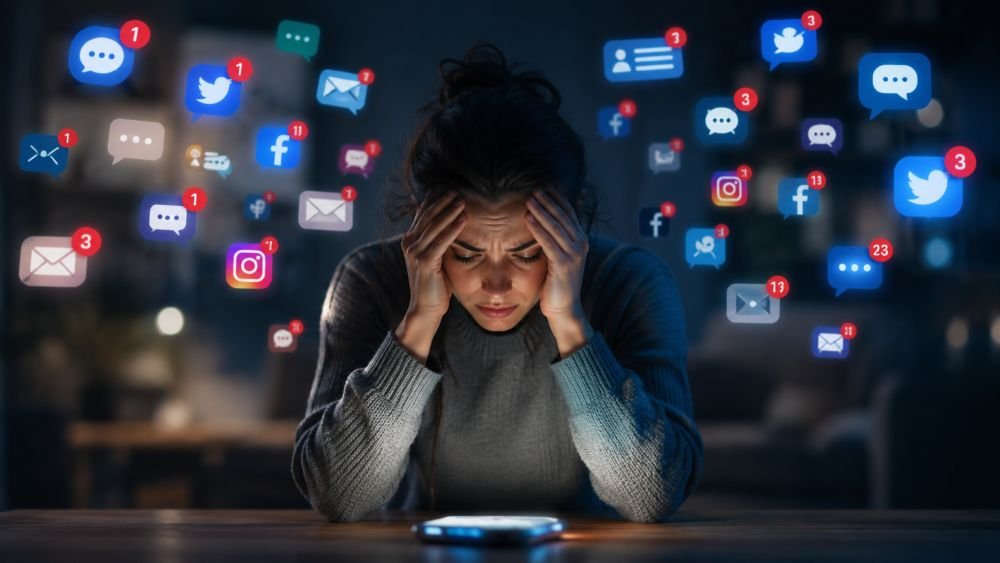
The Psychological Effect of Endless Notifications Is Getting More Attention
In modern society, the sound of a notification has become one of the most familiar experiences in daily life. Smartphones, smartwatches, laptops, tablets, messaging applications, social platforms, financial services, shopping apps, and workplace tools now compete constantly for human attention. What was once viewed as a convenience feature has evolved into an uninterrupted stream of digital interruptions that researchers are increasingly examining from a psychological perspective.
The discussion surrounding notifications has expanded beyond productivity concerns. Mental health professionals, behavioral scientists, technology analysts, and workplace experts are beginning to explore how constant digital alerts may influence emotional well-being, attention patterns, stress responses, and even social behavior.
As per source, the American Psychological Association has repeatedly highlighted concerns surrounding technology-related stress and digital overload. Researchers continue to investigate how continuous connectivity affects cognitive performance and emotional regulation in everyday environments.
Notifications Have Become a Permanent Feature of Modern Life
The average smartphone user interacts with dozens, and often hundreds, of notifications every day. Many of these alerts are not urgent. Most are designed to encourage engagement, promote interaction, increase platform usage, or generate user activity.
This design reflects the modern attention economy, where digital platforms compete aggressively for user focus.
Technology companies increasingly recognize that attention has become one of the most valuable resources in the digital marketplace. Every notification represents an opportunity to bring a user back into an application, website, service, or platform.
A growing number of researchers argue that the cumulative effect of these interruptions deserves greater attention.
“The human brain evolved to respond to signals that may require action,” explains behavioral psychologist Dr. Larry Rosen, whose research has explored technology’s influence on cognition. “The challenge emerges when those signals arrive continuously throughout the day.”
The Hidden Cost of Continuous Interruption
The psychological impact of notifications is not limited to the few seconds required to check an alert.
Researchers studying attention management have found that interruptions often create what experts call an attention residue effect. Even after a person dismisses a notification, a portion of their mental focus may remain attached to the interruption.
As per source, researchers from University of California Irvine have explored how workplace interruptions affect concentration and task completion. Their findings suggest that returning to a previous task often requires additional cognitive effort.
This phenomenon becomes increasingly relevant in environments where notifications arrive throughout the workday.
Employees frequently report feeling busy while simultaneously struggling to maintain deep concentration. Students often experience similar challenges when attempting to focus on learning activities while receiving continuous digital alerts.
The result is not always visible in productivity metrics alone. Many experts believe the larger impact may involve mental fatigue that accumulates gradually over time.
Why Notifications Trigger Strong Psychological Responses
The effectiveness of notifications is closely tied to human psychology.
Many alerts operate through principles similar to variable reward systems. Users never know which notification may contain important information, social validation, financial updates, opportunities, or personal messages. This uncertainty encourages frequent checking behavior.
As per source, researchers have long studied how intermittent rewards influence habit formation. Similar mechanisms are often discussed when analyzing social media engagement patterns and digital platform usage.
A notification may represent:
- social approval
- workplace communication
- financial information
- personal relationships
- breaking news
- entertainment
The brain often treats each alert as potentially meaningful. Over time, this pattern can create heightened anticipation and increased sensitivity to interruptions.
Growing Concerns About Notification Fatigue
Mental health professionals are paying increasing attention to a phenomenon commonly described as notification fatigue.
Notification fatigue occurs when individuals become mentally overwhelmed by the volume of alerts they receive. Symptoms often include frustration, reduced focus, anxiety, emotional exhaustion, and avoidance behavior.
Several industries are already experiencing the effects.
Healthcare professionals regularly discuss alert fatigue within medical systems where excessive notifications can reduce responsiveness to genuinely important warnings. Workplace communication platforms face similar challenges as employees navigate constant messages, reminders, updates, and digital meetings.
The issue extends beyond professional environments.
Parents, students, remote workers, entrepreneurs, and retirees increasingly report feeling pressured to remain continuously available.
This expectation of constant accessibility may contribute to rising levels of digital stress.
Social Relationships Are Also Being Affected
The psychological influence of notifications extends into personal relationships.
A smartphone notification arriving during a conversation may appear insignificant. Repeated interruptions, however, can gradually alter social interactions and communication quality.
Researchers have observed that device-related interruptions often reduce conversational depth and engagement.
Individuals may become physically present while mentally divided between multiple streams of incoming information.
This shift has prompted growing discussion about the concept of continuous partial attention, where individuals remain connected to multiple digital channels simultaneously without fully engaging in any single experience.
As per source, researchers associated with Harvard Business Review have examined how workplace communication technologies affect attention management and employee well-being.
The Emerging Role of Artificial Intelligence
Artificial intelligence may further intensify notification-related challenges.
AI-powered systems increasingly personalize alerts based on individual behavior patterns, preferences, location data, interests, and engagement history.
This evolution creates more relevant notifications, yet it also raises new questions.
Highly personalized alerts may become more effective at capturing attention, making disengagement increasingly difficult for users attempting to establish healthier digital boundaries.
Some experts believe future technology design will need to prioritize attention protection alongside user engagement.
The next phase of digital wellness may involve AI systems that intelligently reduce unnecessary interruptions rather than maximizing them.
New Possibilities for a Healthier Digital Future
Technology companies, educators, healthcare organizations, and policymakers are beginning to explore solutions.
Several emerging trends suggest a shift toward healthier notification management:
- AI-powered notification filtering
- Focus mode technologies
- Digital wellness dashboards
- Attention management tools
- Context-aware communication systems
- Workplace notification policies
The long-term goal is not the elimination of notifications. Digital alerts remain valuable tools for communication, safety, healthcare, business operations, and information sharing.
The larger challenge involves creating systems that respect human attention rather than constantly competing for it.
Researchers increasingly view attention as a limited cognitive resource that deserves protection in the same way society protects physical health and workplace safety.
Why This Conversation Matters More Than Ever
The average person now spends a substantial portion of daily life interacting with connected devices. Notifications influence when people work, communicate, shop, learn, socialize, and consume information.
What appears to be a minor interruption repeated dozens or hundreds of times each day may produce effects that extend far beyond convenience.
The growing attention surrounding notification psychology reflects a broader realization that digital technologies shape human behavior in ways that were not fully understood during the early years of smartphone adoption.
Future discussions about technology may focus less on screen time alone and more on how digital systems influence attention, emotional well-being, relationships, and decision-making.
For many researchers, the notification has become more than a technological feature. It has become a window into understanding how modern life interacts with human psychology.
Related Reading
Readers interested in broader technology and society trends may also enjoy:
- Why Countries Around the World Are Quietly Preparing for an AI Workforce Shift
- The New International Race for AI Infrastructure Is Accelerating Fast
- Why Americans Are Becoming More Emotionally Attached to AI Than Expected
- Current Challenges in Content Detection
- Who Is Responsible for AI-Generated Abuse?
About IAmericanTimes
IAmericanTimes covers World News, United States News, technology trends, business developments, AI innovation, society, psychology, and emerging issues shaping modern life. Our goal is to provide thoughtful reporting that examines not only what is happening today, but also the broader implications that may influence communities, industries, and everyday people in the years ahead.