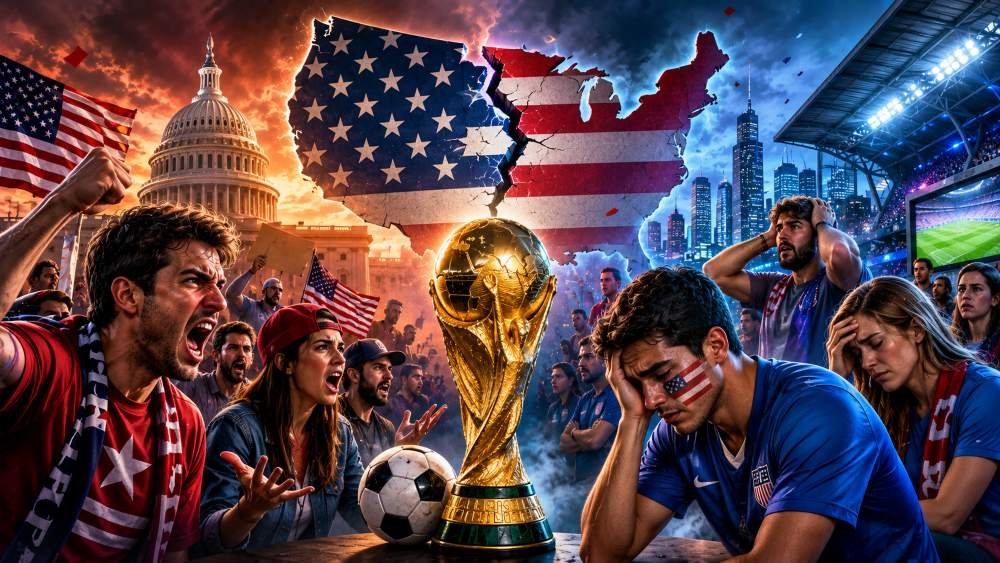
World Cup 2026 Was Supposed to Unite America. Why Are Fans Already Furious?
World Cup 2026 ticket prices trigger anger before the first whistle
The 2026 FIFA World Cup was sold as a once-in-a-generation celebration for the United States, Canada, and Mexico. Instead, weeks before kickoff, the tournament is facing a growing backlash in America over ticket prices that many fans say have pushed ordinary people out of the world’s biggest sporting event.
What was supposed to feel like a national soccer festival is now turning into a debate over affordability, corporate power, dynamic pricing, and whether FIFA has misread the American public.
The frustration is simple: fans want to watch history in person, but many say the cost of entry feels impossible.
High prices turn a global celebration into a class divide
For many American families, the World Cup is not just another sporting event. It is a rare chance to watch the planet’s most popular game on U.S. soil. Children who grew up playing soccer, immigrant families with deep football traditions, and casual fans excited by the scale of the event all expected a moment of shared national energy.
Instead, many are finding ticket prices that feel closer to luxury entertainment than public celebration.
Reports have shown group-stage tickets reaching hundreds of dollars, while premium matches and resale tickets have moved far beyond what average fans can comfortably afford. Even some lower-demand matches have remained expensive enough to raise questions about whether FIFA’s pricing strategy is built more for revenue than accessibility.
That tension has created the central problem for FIFA: the World Cup needs full stadiums, emotional crowds, and visible public excitement. Expensive seats can generate revenue, but empty seats can damage the image of the tournament.
Dynamic pricing becomes the center of the anger
Much of the backlash is connected to FIFA’s use of dynamic pricing. Under this model, prices can change based on demand, availability, and timing. Airlines, hotels, concert platforms, and major sports leagues have used similar systems for years.
The problem is that soccer fans often view the World Cup differently.
To them, it is not a private concert or a luxury vacation package. It is a global sporting event that carries national pride, cultural identity, and emotional meaning. When prices rise sharply, fans do not simply see market behavior. They see exclusion.
Critics argue that dynamic pricing turns fan passion into a financial opportunity. Supporters of the model argue that high demand naturally pushes prices higher in a major entertainment market like the United States.
FIFA President Gianni Infantino has defended the pricing approach by pointing to the nature of the U.S. market, where major sports and entertainment events already command high prices. That explanation has not calmed the anger. For many fans, it only made FIFA sound disconnected from the people who make the sport powerful.
U.S. officials are now watching FIFA closely
The backlash is no longer limited to disappointed fans online. U.S. political leaders and state officials have started raising concerns about FIFA’s ticketing system, pricing transparency, and the effect on ordinary supporters.
Attorneys general in New York and New Jersey have reportedly scrutinized FIFA’s ticketing practices, while elected officials from both parties have questioned whether the tournament is becoming too expensive for working families.
This bipartisan skepticism matters. In a deeply divided America, few issues unite political opponents. Expensive World Cup tickets appear to be one of them.
Officials may differ on immigration, taxes, policing, and foreign policy, but many agree that a tournament hosted partly with the public image of American cities should not feel unreachable for the public itself.
The resale market adds another layer of frustration
The official resale market has created even more tension. Reports indicate that large numbers of tickets have appeared on resale platforms, with some prices dropping as demand weakens for certain matches.
That creates a strange situation.
Some fans bought early at high prices, fearing tickets would become impossible to find later. Now, as resale supply grows for some matches, they may worry they paid too much. Other fans still see prices that remain too expensive, especially once fees, travel, hotels, parking, food, and family costs are included.
This is where the anger deepens. Fans are not only upset about high prices. They are upset about uncertainty.
They do not know whether to buy now, wait, avoid resale, trust FIFA, or skip the event completely. A World Cup ticket should feel like a joyful purchase. For many Americans, it now feels like a financial gamble.
Empty seats could become FIFA’s biggest embarrassment
The World Cup depends on atmosphere. Television viewers around the world expect packed stadiums, flags, singing, color, and emotion. A half-empty stadium, especially in a country still trying to grow soccer’s mainstream popularity, would send the wrong message.
FIFA has projected major revenue from ticketing and hospitality, but revenue alone cannot protect the tournament’s reputation.
If fans see empty seats during matches while ordinary supporters complain they were priced out, FIFA will face a damaging question: did it protect the World Cup experience, or did it overprice the people who create that experience?
The issue is especially sensitive in the United States, where soccer still competes with the NFL, NBA, MLB, college football, and other entertainment options. FIFA cannot simply assume American fans will pay any price for any match.
Luxury packages are widening the perception gap
The ticket backlash is happening at the same time hotels and travel companies are promoting expensive World Cup packages for wealthy visitors. Luxury hotel bundles, premium experiences, private transport, and high-end hospitality offers are creating a picture of a tournament designed for elites.
That image may be profitable, but it is politically risky.
The World Cup’s magic comes from mass participation. Street parties, neighborhood pride, immigrant communities, families, students, and lifelong fans give the tournament its soul. When the public sees more coverage of luxury packages than affordable access, the event starts to feel less like a people’s celebration and more like a private marketplace.
Fans are angry because the promise was bigger than the price tag
The deeper anger is not only about dollars. It is about expectation.
When the United States won the right to co-host the 2026 World Cup, many people imagined a historic summer of soccer. They imagined children attending their first World Cup match, local businesses benefiting from tourism, American cities showing their diversity, and the sport reaching new audiences.
High prices threaten that emotional promise.
The World Cup can still become a powerful moment for America. It can still bring communities together, introduce millions to global football culture, and create memories that last for generations. Yet that will be harder if the loudest pre-tournament story is not the teams, the players, or the cities, but the cost.
What happens next?
FIFA still has time to respond. It can release more affordable tickets, improve pricing transparency, limit confusion in resale markets, and show that accessibility matters alongside revenue.
Political pressure may also continue, especially in host states where officials want residents to benefit from the tournament, not simply watch wealthy visitors take the best seats.
The coming weeks will show whether FIFA adjusts its strategy or waits for the market to decide.
For now, the message from many American fans is clear: they want the World Cup, they want the atmosphere, and they want to be part of history. They just do not want that history priced beyond their reach.
IAmericanTimes covering world and United State News
IAmericanTimes continues covering major world and United States news stories with clear reporting, public-interest analysis, and timely updates on politics, economy, sports, and global events affecting everyday readers.