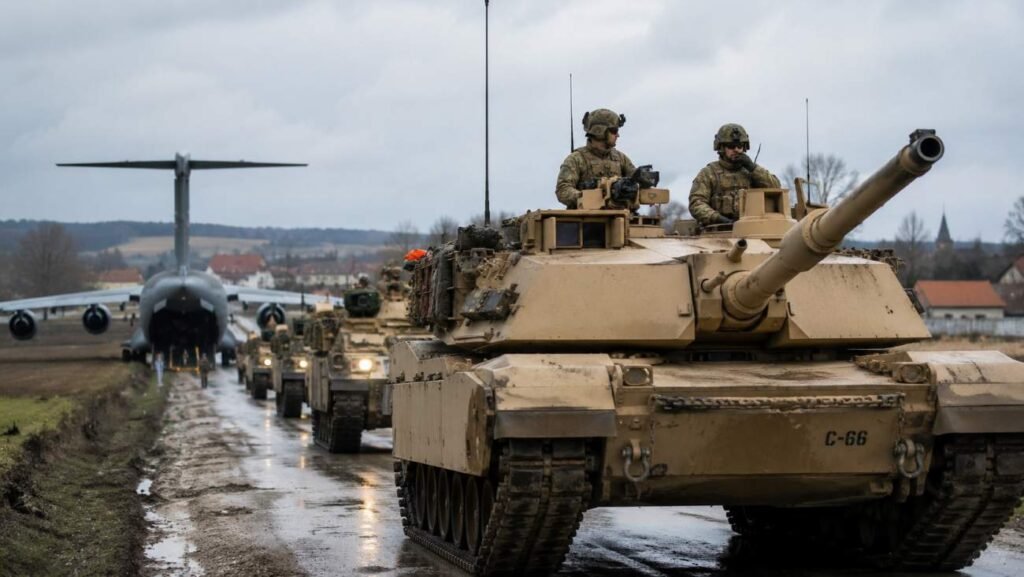
US Pulling 5,000 Troops From Germany, What It Means for NATO and Every American
Politics / National Security Author: David Cooper Estimated read time: 5 minutes
The United States is pulling approximately 5,000 troops out of Germany, and President Trump is already hinting that number could go much higher. The Pentagon confirmed the withdrawal on Friday, May 2, sending shockwaves through NATO and raising urgent questions about America’s role in the world and what it means for security here at home.
Here is everything you need to know.
What the Pentagon Actually Announced
Pentagon spokesman Sean Parnell said the order came from Defense Secretary Pete Hegseth and reflected “a thorough review of the Department’s force posture in Europe” and conditions on the ground. The withdrawal is expected to be completed over the next six to twelve months. NBC News
The move would leave more than 30,000 US troops in Germany, reversing a military buildup that began under President Biden following Russia’s full-scale invasion of Ukraine in 2022. NBC News
But Trump himself quickly signaled the 5,000 figure may only be the beginning. When asked by reporters about the move, President Trump said that even more troop withdrawals could follow, representing a potentially dramatic scale-back of America’s military presence in Europe. CNN
Why Is Trump Doing This Now?
The withdrawal is driven by two overlapping forces: Trump’s long-standing frustration with Germany over NATO defense spending, and rising tensions between Washington and Berlin over the ongoing Iran war.
The Trump administration’s announcement came just days after German Chancellor Friedrich Merz publicly said the United States was being “humiliated” by Iranian leadership, a direct criticism of US strategy in the war that clearly did not sit well with the White House. NBC News
Trump has argued for years that Europe is not paying its fair share for its own defense. NATO members are expected to spend at least 2% of their GDP on defense, a target Germany has historically fallen short of, though Berlin has significantly ramped up military investment since Russia’s 2022 invasion of Ukraine.
The troop drawdown comes as the feud between the US and its European allies over the Iran war has been escalating. For Trump, pulling troops appears to serve double duty: punishing Germany for its public criticism while making good on a campaign promise to reduce America’s overseas military footprint. CNN
How Europe Is Reacting
The reaction across the Atlantic has ranged from cautious to deeply alarmed.
German Defense Minister Boris Pistorius sought to project calm, calling the decision “anticipated” and insisting Germany is ready to shoulder more of the burden of its own defense. “The presence of American troops in Europe, and particularly in Germany, lies in our interest and in the interest of the US,” Pistorius said, adding that Germany must work to strengthen the European pillar within NATO. NBC News
NATO, meanwhile, is scrambling to assess the full scope of what is happening. NATO spokesperson Allison Hart said the alliance is “working with the US to understand the details of their decision on force posture in Germany,” calling the situation one that “underscores the need for Europe to continue to invest more in defense and take on a greater share of the responsibility for our shared security.” CNN
Not everyone is playing it cool. Reports from NBC News indicate that Republican senators are already pushing back, with Senate Armed Services Committee members warning the decision risks “undermining deterrence and sending the wrong signal to Vladimir Putin.” They also noted the Pentagon decided to cancel the planned deployment of the Army’s Long-Range Fires Battalion, a weapons system specifically designed to counter Russian aggression in Eastern Europe. Al Jazeera
Could Spain and Italy Be Next?
Germany may not be alone. The move has rattled NATO allies and added to growing fears that Europe can no longer rely on Washington, with reports suggesting Spain and Italy could face similar troop reductions in the coming months. CBS News
Around 80,000 to 100,000 US personnel are usually stationed in Europe depending on operations, exercises and troop rotations. If Trump follows through on his hints of deeper cuts, the entire structure of American military commitment to Europe, built over 80 years since World War II, could look fundamentally different by the end of his term. Al Jazeera
Europe’s defense annual spending is set to almost double by 2030, reaching nearly $750 billion, but using that money wisely demands a different mindset and far deeper collaboration between European nations, something that has historically been in short supply. NBC News
What This Means for Americans at Home
For most Americans, the immediate question is simple: does this make the US safer or more vulnerable?
Supporters of the withdrawal argue that American taxpayers should not be funding the defense of wealthy European nations indefinitely, and that reducing overseas deployments frees up resources and personnel for domestic priorities and closer-to-home conflicts, including the ongoing war with Iran.
Critics, including members of Trump’s own party, say the math is more complicated. A weakened NATO deterrent in Europe could embolden Russia to push further west, which would ultimately drag the US back into a far more expensive and dangerous confrontation. The cancellation of the Long-Range Fires Battalion deployment is particularly troubling to defense analysts, who view that system as a critical check on Russian missile capabilities in Eastern Europe.
There is also the question of what happens to the troops themselves. The withdrawal reverses a buildup that was specifically designed as a response to Russia’s aggression in Ukraine, meaning the repositioning of these forces comes at a moment of maximum geopolitical instability, not minimum. NBC News
The Bottom Line
The United States pulling 5,000 troops from Germany is not just a military logistics story. It is a signal, to NATO allies, to Russia, to Iran, and to American voters, about what kind of global role the Trump administration believes the US should play going forward.
Whether that signal strengthens or weakens America’s hand in an increasingly dangerous world is a debate that is only just beginning in Washington. What is clear is that this decision will have consequences for security in Europe, for the direction of the Iran war, and ultimately for what it costs American families at home, in tax dollars, in fuel prices, and in the risks that come with a more unstable world.
Also Read – Gas Prices Are Soaring Because of the Iran War, Here’s How Bad It’s Getting and When Relief Could Come