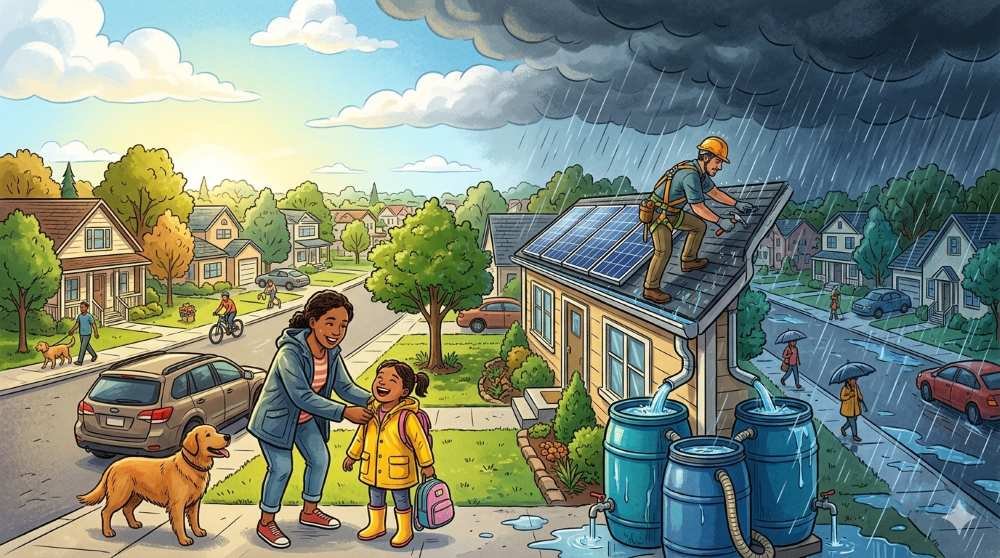
Americans Are Quietly Adapting to More Unpredictable Weather
For decades, weather in the United States was largely viewed as a predictable part of regional identity. Residents in the Southwest expected long periods of heat. Coastal communities prepared for hurricane seasons. Northern states anticipated snowstorms during winter months. Seasonal expectations shaped infrastructure planning, insurance models, travel habits, agricultural cycles, and local economies across the country.
That stability is beginning to shift.
Americans are increasingly adapting to weather patterns that feel less predictable, more disruptive, and financially heavier than previous decades. The adjustment is not occurring through dramatic national announcements alone. It is unfolding quietly inside household budgets, city planning meetings, healthcare systems, school calendars, insurance renewals, transportation networks, and everyday consumer behavior.
The conversation around weather in 2026 is no longer limited to environmental debate. Weather volatility is becoming an economic, social, healthcare, and infrastructure issue that directly affects how millions of Americans live and plan for the future.
Unpredictable Weather Is Reshaping Daily Life Across the Country
Extreme heat waves, stronger storms, prolonged drought conditions, wildfire risks, flooding events, and rapid seasonal fluctuations are increasingly influencing routines that many Americans once considered stable.
Communities across the United States are adjusting school schedules during heat emergencies. Utility providers are preparing for rising electricity demand during extended temperature spikes. Transportation systems are experiencing strain from severe weather interruptions. Insurance companies are reevaluating long-term risk calculations in vulnerable regions.
As per source reporting from National Oceanic and Atmospheric Administration (NOAA), the United States has experienced a rising number of billion-dollar weather and climate disasters over recent years. The growing frequency of high-cost weather events is influencing both public policy discussions and private-sector planning.
The economic effects are becoming increasingly visible for ordinary families. Higher cooling costs, home repair expenses, emergency preparedness purchases, insurance premium increases, and travel disruptions are quietly becoming part of modern financial pressure across many regions of the country.
Americans Are Beginning to Make Long-Term Lifestyle Decisions Around Weather
One of the most significant changes emerging from unpredictable weather patterns involves long-term decision-making.
Housing preferences are beginning to evolve in response to climate concerns. Some buyers are paying closer attention to flood zones, wildfire exposure, water availability, and regional infrastructure resilience before relocating or purchasing property. Employers with remote work flexibility are also indirectly contributing to migration patterns tied to environmental comfort and long-term stability.
The real estate industry is increasingly discussing climate resilience as a practical business consideration rather than a distant environmental issue.
As per source analysis from Redfin and multiple housing market reports, climate risk data is becoming more influential in homebuyer decision-making across several U.S. markets. Insurance accessibility and infrastructure reliability are also beginning to shape local property demand.
The shift reflects a broader psychological adaptation. Americans are no longer evaluating regions only through economic opportunity or lifestyle appeal. Weather stability itself is gradually becoming part of personal risk assessment.
Insurance Companies Are Quietly Becoming Central Players
Insurance providers may ultimately become one of the strongest indicators of how seriously weather unpredictability is affecting the American economy.
Property insurance costs are rising sharply in several high-risk regions. Certain providers have reduced exposure in wildfire-prone or hurricane-vulnerable markets. Homeowners in some states are facing growing difficulty securing affordable coverage.
This transformation has consequences that extend far beyond insurance paperwork.
Mortgage approvals, real estate investment, business expansion, infrastructure financing, and long-term development planning all depend heavily on stable insurance markets. Rising environmental uncertainty creates ripple effects across nearly every sector tied to property and regional economic growth.
As per source reporting from The Insurance Information Institute, weather-related catastrophe losses continue placing increasing pressure on insurers, policy pricing, and regional risk calculations throughout the United States.
The financial implications are becoming particularly important for middle-class families who already face inflationary pressure in housing, utilities, transportation, and healthcare costs.
Weather Volatility Is Affecting Healthcare Systems
Healthcare systems are also adapting to environmental instability in ways that many Americans may not immediately recognize.
Extreme heat events create additional strain on emergency rooms, elderly care facilities, public health systems, and transportation services. Wildfire smoke exposure affects respiratory health across large geographic areas. Flooding and storm-related disruptions complicate medical logistics, prescription access, and continuity of care.
Healthcare administrators increasingly view weather resilience as part of operational planning.
As per source information from Centers for Disease Control and Prevention (CDC), severe heat exposure, poor air quality, and weather disasters create elevated health risks for vulnerable populations including seniors, children, and individuals with chronic medical conditions.
The intersection between healthcare and climate pressure may become one of the most important infrastructure conversations of the next decade.
Businesses Are Quietly Recalculating Risk
American businesses are also adapting to unpredictable weather in less visible ways.
Supply chain strategies are changing. Backup energy systems are becoming more common. Warehousing locations, shipping routes, staffing plans, and operational scheduling increasingly account for environmental instability.
Agriculture, construction, transportation, tourism, and retail sectors are particularly exposed to weather disruption. Even technology companies are closely monitoring environmental conditions due to the massive energy and cooling requirements associated with modern data centers and AI infrastructure expansion.
The financial world is beginning to interpret climate resilience as a competitive advantage rather than merely a sustainability discussion.
Psychological Adaptation May Become the Largest Shift
The most profound transformation may ultimately be psychological rather than environmental.
Americans are gradually normalizing uncertainty around weather in ways that would have seemed unusual a generation ago. Conversations about evacuation plans, air quality alerts, cooling centers, emergency kits, backup generators, and regional climate risks are becoming more integrated into ordinary life.
This adaptation process is subtle, yet culturally significant.
Previous generations often viewed severe weather as isolated disruption. Many Americans now increasingly perceive environmental unpredictability as a recurring condition that requires continuous preparation.
That psychological transition changes how communities evaluate security, stability, infrastructure, and long-term planning.
The Future of American Infrastructure May Depend on Adaptation Speed
The next phase of national discussion may focus less on whether weather patterns are changing and more on whether infrastructure systems can adapt quickly enough.
Electrical grids, transportation systems, water management networks, healthcare facilities, housing development, insurance structures, and emergency response operations are all being tested by environmental volatility.
The challenge extends beyond environmental science. It is becoming a test of economic resilience, institutional planning, and social adaptability.
Cities and states that successfully modernize infrastructure around climate resilience may gain long-term economic advantages. Regions that struggle to adapt could face increasing pressure tied to population shifts, insurance instability, and operational costs.
Why This Story Matters Beyond Weather
The growing unpredictability of weather in America is no longer simply an environmental headline. It is becoming part of the broader national conversation about economic security, public health, infrastructure modernization, and quality of life.
Americans are quietly adapting in ways that affect how they spend money, where they live, how businesses operate, and how communities prepare for the future. The long-term consequences may reshape housing markets, healthcare systems, transportation planning, and regional economic growth across the country.
IAmericanTimes continues covering world and United States news with a focus on the economic, technological, environmental, and social shifts shaping modern life. The publication follows emerging developments that influence communities, businesses, and public conversations across America and beyond.