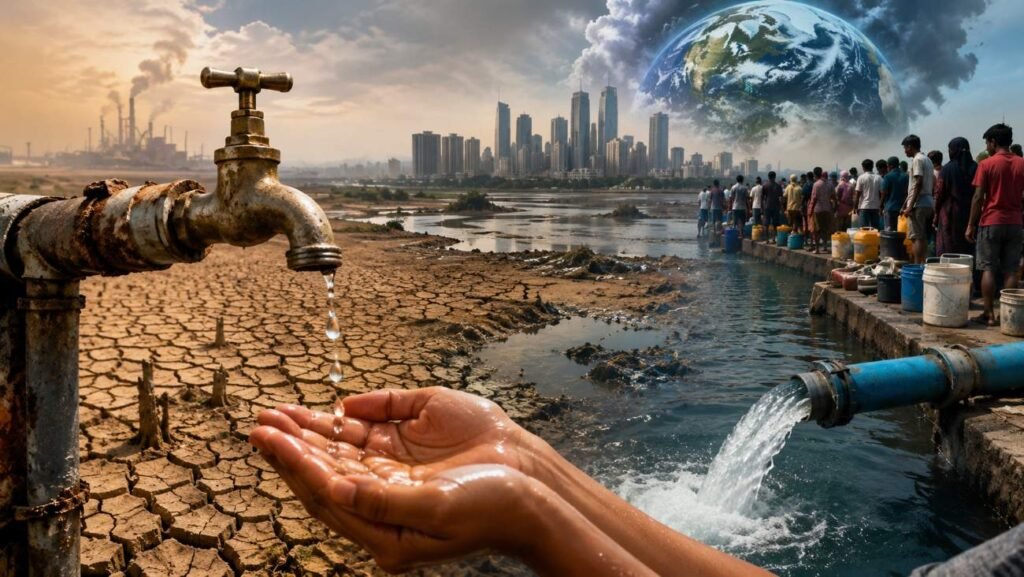
The Global Water Pressure Crisis Experts Are Watching Closely
Water has historically been discussed as an environmental issue, a conservation topic, or a regional infrastructure challenge. The global conversation is now shifting toward something far more serious. Researchers, governments, climate analysts, and infrastructure planners are increasingly treating water pressure instability as a growing structural risk capable of affecting economies, healthcare systems, agriculture, urban expansion, migration patterns, and geopolitical stability simultaneously.
The phrase “water pressure crisis” no longer refers only to weak household plumbing or isolated municipal failures. Experts are now using the term more broadly to describe the mounting strain placed on freshwater systems as population growth, climate volatility, aging infrastructure, industrial demand, and energy production collide at unprecedented speed.
This emerging pressure is not limited to traditionally dry regions. Cities and nations that once considered water abundance a permanent advantage are beginning to confront infrastructure stress that many planners believe could reshape future development strategies across the world.
Why Water Pressure Is Becoming a Global Concern
Modern civilization depends on stable water movement systems far more than many people realize. Water pressure influences sanitation, agriculture, manufacturing, healthcare operations, energy production, firefighting systems, transportation infrastructure, and residential living conditions. Once pressure systems become unstable, entire urban environments can begin experiencing cascading operational problems.
As per source United Nations Water, global freshwater demand is projected to rise significantly over the coming decades as urbanization and industrial expansion continue accelerating. Population growth alone is placing increasing stress on already aging water distribution systems.
Many water networks across the world were originally designed for smaller populations and more stable climate patterns. Those assumptions are no longer holding consistently true.
Large metropolitan regions are now dealing with:
- aging underground pipelines
- leakage-related water loss
- inconsistent rainfall
- aquifer depletion
- rising industrial demand
- higher energy requirements for water transport
- expanding suburban development
The combination of these pressures is forcing municipalities to rethink how water systems operate under modern conditions.
Climate Volatility Is Intensifying Infrastructure Stress
Climate instability has become one of the central drivers behind growing water pressure concerns.
Extended drought cycles reduce reservoir replenishment and groundwater recovery. Sudden extreme rainfall events create the opposite problem by overwhelming drainage systems, damaging pipelines, and disrupting treatment facilities. Infrastructure built for predictable seasonal patterns is increasingly struggling to adapt to volatile climate behavior.
As per source World Resources Institute, several regions around the world are approaching higher levels of water stress due to changing climate conditions combined with rising consumption demand.
This issue extends beyond water scarcity itself. Pressure instability can emerge even in regions that still receive significant rainfall if storage systems, treatment capacity, or distribution infrastructure cannot manage shifting weather patterns effectively.
Some analysts now believe future infrastructure planning may focus less on water availability alone and more on pressure resilience across entire distribution ecosystems.
Aging Infrastructure Is Quietly Becoming a Major Risk
Many developed countries are now confronting a less visible but equally important challenge: aging water infrastructure.
Large portions of underground water systems in North America and Europe were installed decades ago. Some pipelines currently operating in major cities were built generations earlier under entirely different population assumptions.
As per source American Society of Civil Engineers, aging infrastructure remains one of the most significant long-term concerns facing U.S. water systems. Leakage, maintenance delays, corrosion, and outdated treatment facilities are contributing to increasing operational vulnerabilities.
Water pressure problems often begin quietly before becoming publicly visible. Small pressure fluctuations can increase contamination risks, reduce firefighting capability, damage residential plumbing systems, and increase operational costs for hospitals, schools, and businesses.
Infrastructure analysts increasingly warn that delayed modernization efforts may eventually create far larger financial burdens than proactive system upgrades.
Water Pressure Instability Could Affect Global Food Systems
Agriculture represents another major dimension of the crisis.
Modern food production relies heavily on predictable irrigation systems and stable freshwater access. Water pressure instability can reduce agricultural efficiency long before full-scale drought conditions emerge.
Farmers across multiple regions are already adapting to:
- inconsistent irrigation flow
- groundwater reduction
- rising pumping costs
- changing rainfall timing
- increased competition for freshwater access
As per source Food and Agriculture Organization of the United Nations, agriculture remains the largest global consumer of freshwater resources, placing additional importance on long-term water sustainability planning.
Food economists increasingly believe water instability could influence future crop pricing, regional food security, supply chain reliability, and migration trends. The issue may gradually evolve from an environmental discussion into a broader economic stability concern.
The Energy Sector Is Closely Connected to Water Pressure Stability
Many people still view water and energy as separate systems. Modern infrastructure treats them as deeply interconnected.
Energy production often requires significant water usage for cooling systems, industrial processing, and electricity generation. Water treatment and transport systems simultaneously require substantial energy consumption to maintain operational pressure.
This creates a feedback relationship where pressure disruptions in one sector can affect the other.
Some experts now warn that future infrastructure planning must treat water and energy resilience as part of the same strategic framework rather than isolated utility categories.
Desalination technology, advanced recycling systems, smart water monitoring networks, and AI-assisted leak detection are increasingly attracting government and private-sector investment as nations search for scalable solutions.
Urban Expansion Is Accelerating the Problem
Rapid urbanization is adding another layer of complexity to global water pressure concerns.
Cities continue expanding outward while population density increases inside existing metropolitan areas. High-rise residential development, industrial parks, data centers, healthcare facilities, and transportation infrastructure all require stable water delivery systems operating under higher demand conditions than many networks were originally designed to handle.
As per source World Bank, urban populations are expected to continue rising significantly over coming decades, increasing infrastructure pressure across transportation, energy, housing, and water systems simultaneously.
The challenge is not limited to megacities. Mid-sized urban regions may face particularly difficult pressure-management decisions because they often lack the financial flexibility available to larger global economic centers.
Water Could Become One of the Defining Strategic Issues of the Next Decade
Security analysts are increasingly discussing water through the lens of long-term geopolitical stability.
Water access influences:
- economic productivity
- industrial competitiveness
- agricultural reliability
- migration pressure
- healthcare resilience
- political stability
Several regions already experiencing population growth and climate stress may face rising tension around freshwater management during the coming decades.
The possibility of “water diplomacy” becoming more central to international relations is receiving growing attention among geopolitical researchers and infrastructure strategists.
Some analysts believe future economic competitiveness may partially depend on how effectively nations modernize water distribution systems before infrastructure stress intensifies further.
Technology May Change How Water Systems Operate
The next phase of water infrastructure may become significantly more technology-driven.
Artificial intelligence systems are already being tested for:
- predictive leak detection
- pressure optimization
- infrastructure monitoring
- usage forecasting
- contamination risk analysis
Smart sensors capable of identifying pressure fluctuations in real time may allow municipalities to detect infrastructure failures earlier than traditional systems currently permit.
Private companies and governments are also investing heavily in:
- atmospheric water generation
- advanced desalination
- wastewater recycling
- decentralized treatment systems
- pressure-adaptive pipeline networks
These technologies could eventually transform water infrastructure from reactive maintenance systems into predictive operational ecosystems.
Why Experts Believe the Issue Deserves More Public Attention
Water infrastructure often remains invisible to the public until systems fail visibly.
Electricity outages create immediate awareness. Transportation disruptions attract rapid media attention. Water pressure instability tends to develop gradually beneath cities, industrial zones, and residential communities before becoming publicly understood.
That delayed visibility may partially explain why infrastructure analysts believe the issue has not yet received the same level of public urgency as other global risks.
The broader concern extends beyond shortages alone. Stable water pressure represents one of the foundational systems supporting modern civilization itself. Once reliability declines, the economic and social consequences can spread much faster than many communities expect.
The global water pressure crisis is no longer being viewed solely as an environmental conversation. Increasingly, experts are treating it as a defining infrastructure challenge of the modern era.